
Official announcementDell Blog
OTel 2.0: Dell Technologies, AT&T and AMD Bring Open Telco AI to Scale
See how Dell, AT&T and AMD help bring OTel 2.0 from open model release to production-ready deployment.

See how Dell, AT&T and AMD help bring OTel 2.0 from open model release to production-ready deployment.
By David Trigg |
August 26, 2026August 25, 2026
Topics in this article [Customer](/en-us/blog/tags/customer/)[Telecommunications](/en-us/blog/tags/telecommunications/)
Key takeaways 5 min read
-
OTel 2.0 moves open telco AI from models to production, aligning operators on telecom-grade intelligence.
- Dell, AT&T and AMD combine open models, operator insight and high-performance compute for real network outcomes.
- On-premises, validated AI infrastructure keeps data under operator control while scaling training and inference.
The telecom industry has reached a turning point. Communications Service Providers (CSPs) have long needed AI built for the realities of their networks, not general-purpose models adapted from other industries. AT&T’s OTel 2.0 release answers that call with an open model built specifically for telecoms. At the AMD Advancing AI event, AT&T Chief Technology Officer Jeremy Legg took the stage alongside Dan McNamara, AMD’s Senior Vice President and General Manager of Compute and Enterprise AI, to announce OTel 2.0, a milestone that marks the shift from foundational models to production-ready network intelligence. Dell is proud to be part of making that happen.
The initiative that changed the starting point
When it was launched earlier this year, the Open Telco AI initiative brought the industry together around something it had long needed: an open ecosystem for building domain-specific AI built on shared telecom data, standards, benchmarks and tools. GSMA helped establish a common foundation that operators and technology partners can build on, including telecom-specific datasets and community benchmarks. That shared starting point gives the industry a more credible path forward than the fragmented, piecemeal approach that had held telco AI back.
AT&T joined as a founding contributor, bringing something the initiative needed most: real operator insight. Using data provided by GSMA through Open Telco AI and grounded in genuine network conditions, AT&T released the first OTel models when the initiative launched. Now it has released OTel 2.0, the largest and best-performing open-source model built for telecoms.
Why? Because telecom is unlike any other environment for AI. Networks are vast, highly regulated and unforgiving of errors. A model that performs well on generic data can stumble when asked to interpret network telemetry, troubleshoot faults or automate operations. OTel 2.0 changed the starting point. It gave the industry AI that speaks telecom from day one. All of the OTel models understand telco language, 3GPP standards, documentation and the complexity of modern networks — built for telecom from the ground up rather than adapted after the fact.
Since release, OTel 2.0 has already been downloaded more than 5 million times, building on momentum from OTel 1.0 models that were downloaded nearly 30 million times.
OTel 2.0: From open models to production networks
Telecom companies work with data at a scale that few other industries see. AT&T processed more than 1 trillion tokens to generate roughly 440 billion training tokens.
That’s where the collaboration among Dell, AT&T and AMD became essential. Training and validating telecom-grade AI models at this level demands serious computing power. AMD provided the high-performance hardware foundation for both training and inference workloads throughout the development of OTel 2.0. The commitment from AMD to open AI infrastructure and hardware flexibility aligns directly with what OTel is designed to achieve.
Dell integrated this technology with AI-optimized servers for telecom environments, validated configurations and the systems integration expertise needed to make everything work as one. The result is a production-grade foundation that operators can trust across demanding, real-world network environments.
The Dell AI solution behind OTel 2.0
The foundation of the OTel 2.0 on-premises training infrastructure is the Dell PowerEdge XE9785 server, configured with eight AMD Instinct™ MI355X GPUs. This AI-optimized server delivers exceptional compute density, high memory bandwidth and performance at scale that large-scale AI model training demands, all within a validated, deployment-ready configuration that operators can rely on.
What we can say now is that Dell’s on-premises infrastructure approach kept data under operator control throughout the training process. No public cloud dependency. No compromise on data governance. Just validated AI infrastructure running where the network lives. Training will continue on Dell servers in the upcoming weeks, and updated model weights will be released accordingly.
Dell, AT&T and AMD: A partnership built on Open Telco AI
The collaboration between Dell, AT&T and AMD reflects a shared conviction that open, industry-wide AI will drive the telecom industry further and faster than any single company could alone. Open models are a powerful start. But models alone don’t run networks. The harder, more valuable work is taking those models and deploying them at scale, in live production environments, where reliability and performance are non-negotiable.
AT&T brings the operator expertise and real-world network insight that make OTel 2.0 credible. AMD brings the compute performance and open software ecosystem that make large-scale training and inference practical. Dell brings the infrastructure, systems integration and engineering depth that make it all deployable. Together, we’re helping close the gap between what Open Telco AI can do and what it actually delivers in production.
Together, this group offers something concrete with a clear route from open models to real outcomes. Instead of navigating that journey alone, operators gain a foundation built and validated for the demands of telecom. Instead of choosing between openness and reliability, they get both.
What this means for mobile operators
If you’re responsible for planning, building or running a modern network, OTel 2.0 deserves your attention. It combines AT&T’s operator expertise, AMD Instinct compute and Dell’s production-grade infrastructure into a platform you can build on.
The opportunity is real and it’s here now. Because the OTel models are open and designed for flexible deployment across clouds and on-premises environments, operators are not locked into any single vendor roadmap. They are free to build on a foundation the entire industry helped create.
Ready to explore how Dell can support your open telco AI journey? Visit Dell Telecom to learn more about the Dell AI for Telecom program.
About the Author: David Trigg
David Trigg is the Global Vice President of Market Development within the Telecom Systems Business. In this role, Mr. Trigg is responsible for driving a modern telco ecosystem, working with partners and leading a team to drive telecom cloud transformations within Dell’s top telco customers.
Mr. Trigg has nearly two decades of corporate management experience within telecom and IT organizations. He has been at Dell Technologies (EMC) for nearly 10 years and help start and run the Cloud Service Provider business. Prior to joining Dell Technologies, he held several leadership roles at Qwest/CenturyLink, a $20 billion telecommunications company located in the United States. Most recently, Mr. Trigg was responsible for running Qwest’s hosting and application services business. Prior to this role, he was responsible for the business unit strategy for the Business Markets Group, a $4 billion enterprise division within Qwest. While at his tenure at Qwest/ CenturyLink, Mr. Trigg also held key leadership roles within the product, operations, and sales organizations.
Prior to Qwest/CenturyLink, Mr. Trigg held several leadership roles in sales, sales engineering, product management and product development in several high technology companies.
Mr. Trigg graduated from University of Colorado with a B.S. in Business Administration. He currently resides in Colorado with his wife and two teenage boys. He enjoys skiing and golf and spending time with his family.
Topics in this article [Customer](/en-us/blog/tags/customer/)[Telecommunications](/en-us/blog/tags/telecommunications/)
Related stories

Official announcement
Samsung Galaxy S26 FE: Delivering the Latest Flagship Experience, Focused on What Matters Most
Samsung Newsroom
Samsung Electronics today announced Galaxy S26 FE, the newest addition to the Galaxy S26 family and the first in the lineup to launch with One UI 9 — bringing the latest premium Galaxy experiences to more users from day one. With enhanced camera capabilities and more context-awar

Official announcement
Giga-Scale AI and the Ethernet Evolution: How Spectrum-X Ethernet Rewrites the Rules
NVIDIA Developer Blog
The massive growth of generative AI has fundamentally altered data center design. As distributed model training scales to span hundreds of thousands of GPUs,... The massive growth of generative AI has fundamentally altered data center design. As distributed model training scales
Official announcement
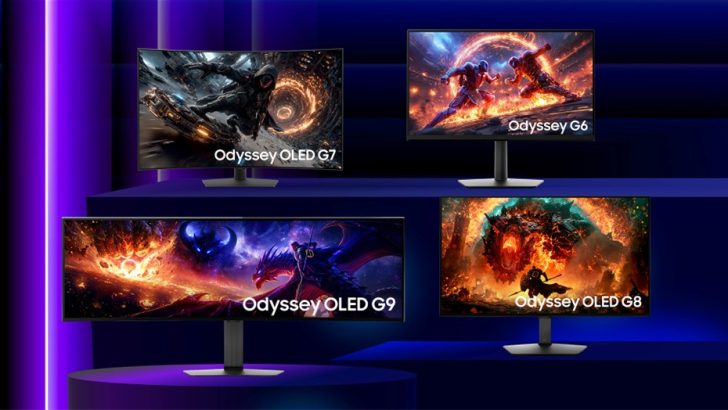
Samsung Introduces New Odyssey Lineup for Fast-Paced Gaming at Gamescom 2026
Samsung Newsroom
Samsung Electronics today announced its 2027 Odyssey gaming monitor lineup at Gamescom 2026, the world’s largest gaming event, being held in Cologne, Germany from Aug. 26-30. The new lineup introduces multiple Odyssey models that feature world-first innovations, empowering player

Official announcement
How we saved 100 terabytes of memory by optimizing 1.1.1.1’s DNS cache
Sebastiaan Neuteboom
Big Pineapple , the platform behind 1.1.1.1 , Gateway DNS , DNS Firewall , AS112 , and several other Cloudflare DNS services, stores over 250 billion DNS cache entries at any given time. At that scale, wasting a single byte per entry costs more than 250 gigabytes of memory across
Official announcement
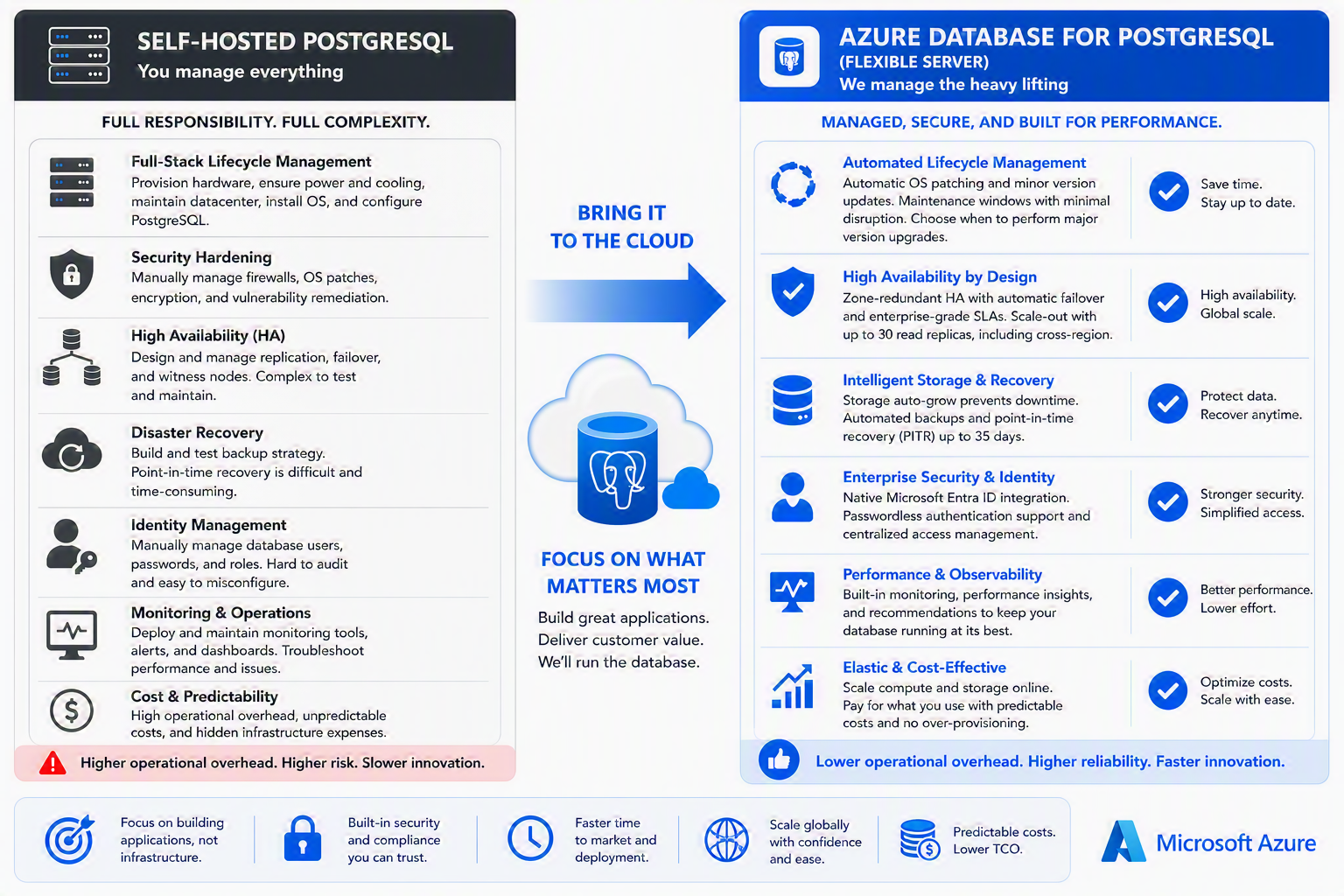
Managed PostgreSQL vs. self-hosted PostgreSQL: Key benefits and trade-offs
Lauro Ojeda
Summary This post is for technical decision makers evaluating where to run production PostgreSQL workloads. It compares two valid operating models—self-managed PostgreSQL and a managed database service—through business and operational outcomes: control, engineering capacity, resi

Official announcement
OpenClaw went viral. Meet the maintainers building and securing it.
Gregg Cochran
What began as a personal experiment quickly became a global open source project with extraordinary momentum. OpenClaw is a personal AI assistant that runs on users’ devices and connects with the messaging channels they already use. Started by Peter Steinberger as a weekend projec