
CUPERTINO, CALIFORNIA Apple today debuted M6 in the new Mac mini and M5 Ultra in the new Mac Studio, providing an extraordinary leap in performance and AI capabilities. M6, Apple’s first state-of-the-art 2-nanometer chip, advances every compute block, delivering gains across every dimension of performance. The chip features a larger 12-core CPU complex with the world’s fastest CPU core, a larger 12-core GPU with Neural Accelerators, a Dual 16-core Neural Engine, and up to 170GB/s of unified memory bandwidth.1 M5 Ultra, the ultimate powerhouse for pro and AI workloads, uses next-generation UltraFusion technology to form a quad-die architecture for the first time in an M-series system on a chip (SoC). The chip includes an up-to-36-core CPU and up-to-80-core GPU with a massive 1.2TB/s of unified memory bandwidth, 50 percent more than M3 Ultra. With their advanced technologies, these SoCs deliver extraordinary compute with industry-leading power efficiency, empowering users to do even more on a desktop.
Apple introduces M6 and M5 Ultra for a big leap in performance and AI compute
Apple debuted M6 in the new Mac mini and M5 Ultra in the new Mac Studio, providing an extraordinary leap in performance and AI capabilities.

“Today, we’re debuting the next giant leap in performance and AI compute for Apple silicon with the incredibly advanced M6 and the most powerful M-series chip yet, M5 Ultra,” said Sri Santhanam, Apple’s vice president of Silicon Engineering Group. “Built using the cutting-edge 2 nm process, M6 combines a new CPU complex, two additional CPU and GPU cores, a Dual 16-core Neural Engine, and more unified memory bandwidth to power through workloads with amazing energy efficiency. And for the ultimate desktop performance and the ability to run massive AI models, M5 Ultra features a massive GPU, now with Neural Accelerators, and more unified memory bandwidth, pushing the boundaries of what a desktop can do.”
M6: Optimized Design and Enhanced Performance
Designed to power the workflows of everyday users, students, developers, AI hobbyists, and enterprises, M6 offers the ideal balance of performance, power efficiency, and on-device AI to effortlessly fly through daily tasks, coding, and creative projects.
M6 is built using cutting-edge 2 nm process technology, packing greater transistor density into a smaller die for a major leap in performance and power efficiency. M6 also introduces a Dual 16-core Neural Engine, providing up to 2x the peak compute over previous generations to make on-device AI workflows run even faster. System frameworks can automatically utilize both engines simultaneously, enabling applications to see faster model execution.
Related stories

Samsung Galaxy S26 FE: Delivering the Latest Flagship Experience, Focused on What Matters Most
Samsung Newsroom
Samsung Electronics today announced Galaxy S26 FE, the newest addition to the Galaxy S26 family and the first in the lineup to launch with One UI 9 — bringing the latest premium Galaxy experiences to more users from day one. With enhanced camera capabilities and more context-awar

How AI Coding Agents Can Unlock Materials Simulation with NVIDIA ALCHEMI Toolkit
NVIDIA Developer Blog
Atomistic simulation requires three things: knowledge of the science, compute-efficient implementation of simulations, and accessible interfaces to the... Atomistic simulation requires three things: knowledge of the science, compute-efficient implementation of simulations, and ac

Samsung Introduces New Odyssey Lineup for Fast-Paced Gaming at Gamescom 2026
Samsung Newsroom
Samsung Electronics today announced its 2027 Odyssey gaming monitor lineup at Gamescom 2026, the world’s largest gaming event, being held in Cologne, Germany from Aug. 26-30. The new lineup introduces multiple Odyssey models that feature world-first innovations, empowering player

How we saved 100 terabytes of memory by optimizing 1.1.1.1’s DNS cache
Sebastiaan Neuteboom
Big Pineapple , the platform behind 1.1.1.1 , Gateway DNS , DNS Firewall , AS112 , and several other Cloudflare DNS services, stores over 250 billion DNS cache entries at any given time. At that scale, wasting a single byte per entry costs more than 250 gigabytes of memory across
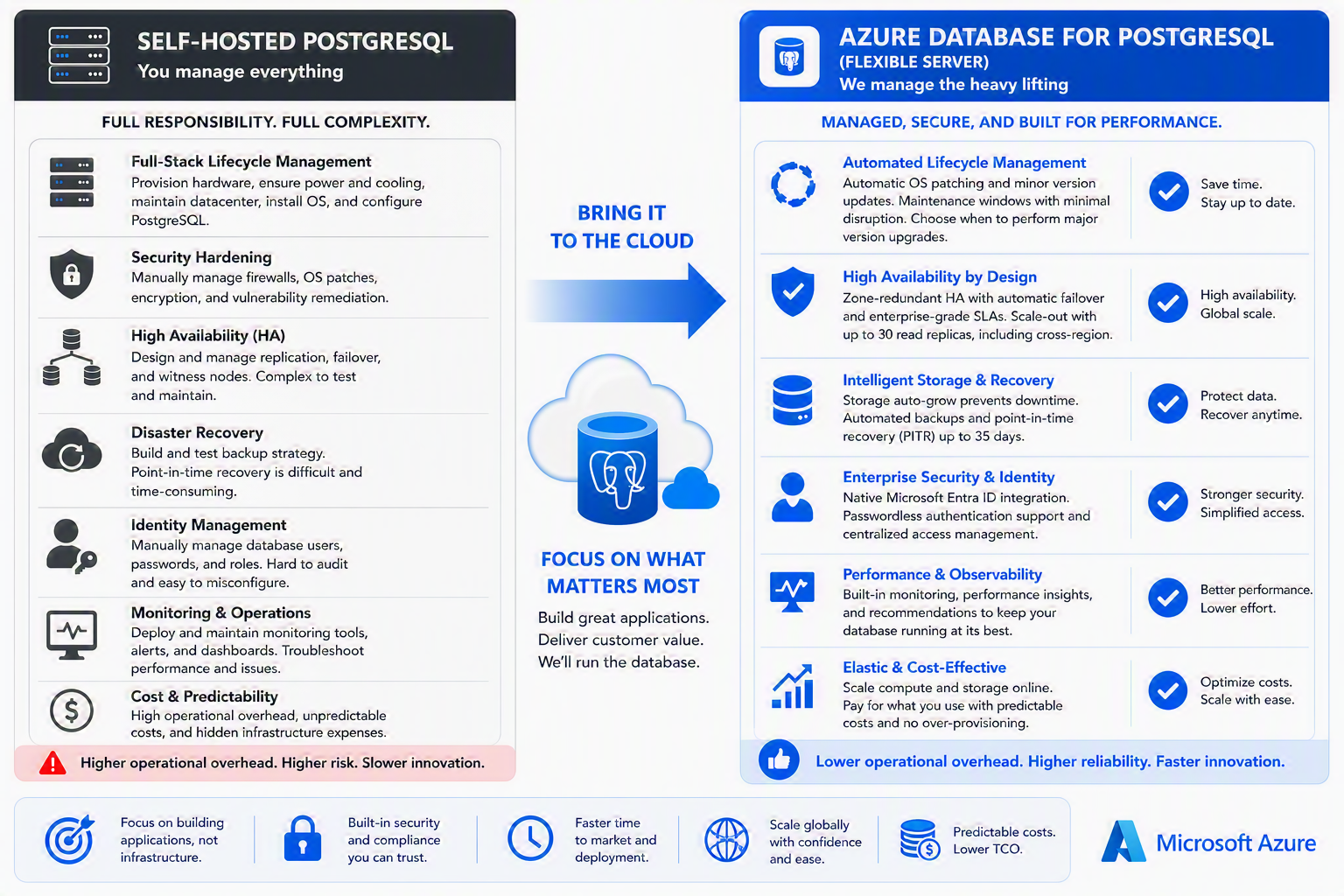
Managed PostgreSQL vs. self-hosted PostgreSQL: Key benefits and trade-offs
Lauro Ojeda
Summary This post is for technical decision makers evaluating where to run production PostgreSQL workloads. It compares two valid operating models—self-managed PostgreSQL and a managed database service—through business and operational outcomes: control, engineering capacity, resi

The Most Efficient Token Is One You Don’t Spend
Dell Blog
Why better enterprise data is the foundation of a more affordable AI future.