<p>Amazon Connect Customer now enables managers to input unplanned shrinkage in agent schedules, providing a more accurate picture of staffing due to unscheduled agent absences such as late logins or unplanned sick leave. Managers can upload unplanned shrinkage assumptions directly into agent schedules and immediately see updated scheduling metrics such as scheduled headcount, net staffing, and projected service level — each adjusted for unplanned shrinkage. For example, if 10% of the agents scheduled to work at 8 AM next Monday are expected to be unavailable due to late logins, then projected service level falls from 90% to 85% with unplanned shrinkage. This enables workforce managers to proactively address gaps in staffing that may arise due to unplanned agent unavailability, thus improving scheduling accuracy and their ability to maintain target service levels.</p>
<p> </p>
<p>This feature is available in all <a href="https://docs.aws.amazon.com/connect/latest/adminguide/regions.html#optimization_region">AWS Regions </a> where Amazon Connect Customer agent scheduling is available. To learn more about Amazon Connect Customer agent scheduling, click <a href="https://docs.aws.amazon.com/connect/latest/adminguide/forecasting-capacity-planning-scheduling.html">here </a>.</p>
Amazon Connect Customer now supports unplanned shrinkage in agent schedules
Amazon Connect Customer now enables managers to input unplanned shrinkage in agent schedules, providing a more accurate picture of staffing due to unscheduled agent absences such as late logins or unplanned sick leave. Managers can upload unplanned shrinkage assumptions directly

Pixabay (free commercial use)
Related stories

Giga-Scale AI and the Ethernet Evolution: How Spectrum-X Ethernet Rewrites the Rules
NVIDIA Developer Blog
The massive growth of generative AI has fundamentally altered data center design. As distributed model training scales to span hundreds of thousands of GPUs,... The massive growth of generative AI has fundamentally altered data center design. As distributed model training scales

How AI Coding Agents Can Unlock Materials Simulation with NVIDIA ALCHEMI Toolkit
NVIDIA Developer Blog
Atomistic simulation requires three things: knowledge of the science, compute-efficient implementation of simulations, and accessible interfaces to the... Atomistic simulation requires three things: knowledge of the science, compute-efficient implementation of simulations, and ac

How we saved 100 terabytes of memory by optimizing 1.1.1.1’s DNS cache
Sebastiaan Neuteboom
Big Pineapple , the platform behind 1.1.1.1 , Gateway DNS , DNS Firewall , AS112 , and several other Cloudflare DNS services, stores over 250 billion DNS cache entries at any given time. At that scale, wasting a single byte per entry costs more than 250 gigabytes of memory across
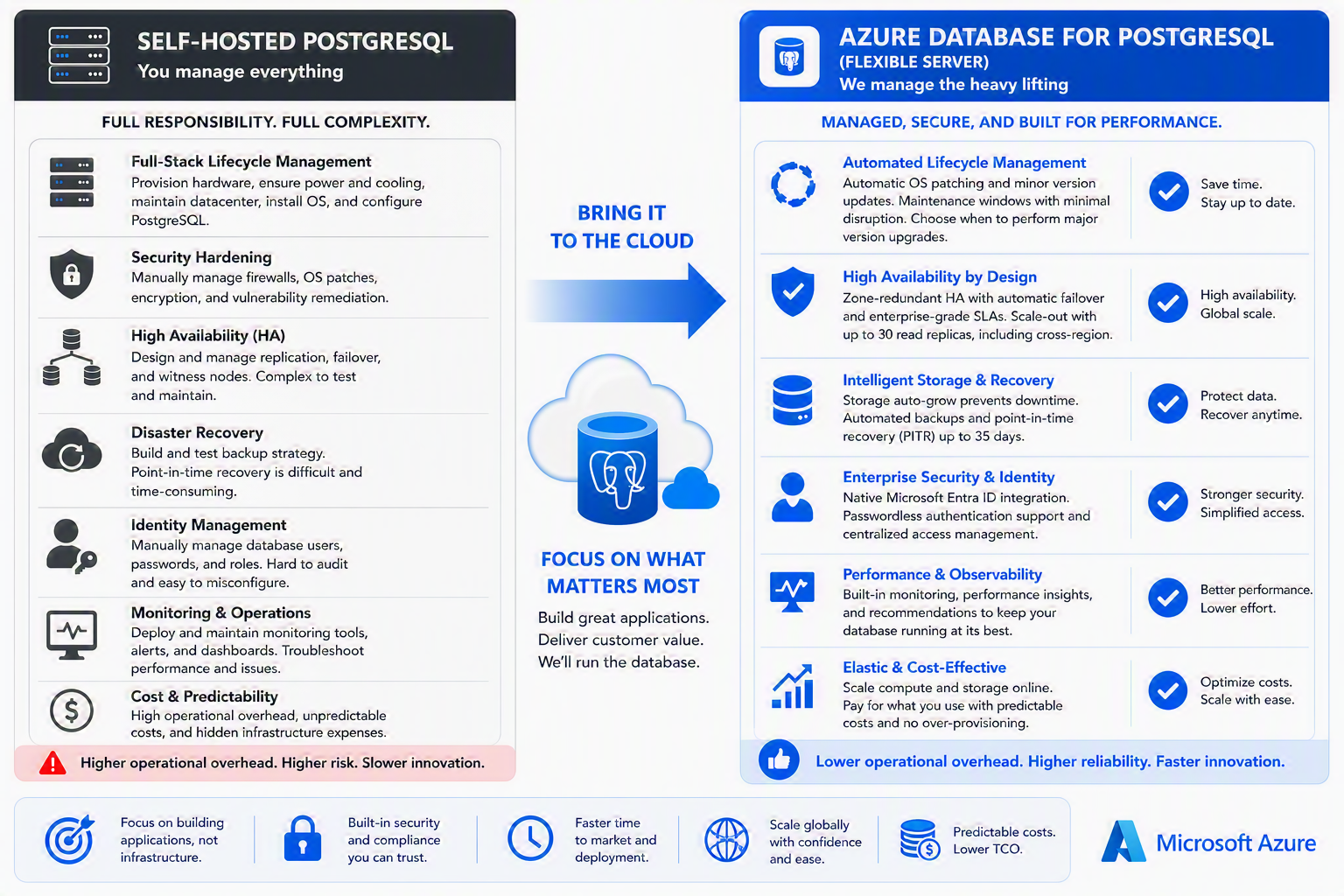
Managed PostgreSQL vs. self-hosted PostgreSQL: Key benefits and trade-offs
Lauro Ojeda
Summary This post is for technical decision makers evaluating where to run production PostgreSQL workloads. It compares two valid operating models—self-managed PostgreSQL and a managed database service—through business and operational outcomes: control, engineering capacity, resi

OpenClaw went viral. Meet the maintainers building and securing it.
Gregg Cochran
What began as a personal experiment quickly became a global open source project with extraordinary momentum. OpenClaw is a personal AI assistant that runs on users’ devices and connects with the messaging channels they already use. Started by Peter Steinberger as a weekend projec

IBM Brings AI-Powered US Open Fan Experience Back to Madison Square Park
IBM Newsroom
Join IBM for AI-powered tennis activations, live US Open match viewing, giveaways and more during Championship Weekend