
<p>Amazon MSK Replicator now supports OAuth 2.0 (SASL/OAUTHBEARER) authentication for data replication from external Apache Kafka clusters - including on-premises, self-managed on AWS, or other cloud providers - to <a href="https://docs.aws.amazon.com/msk/latest/developerguide/msk-provisioned.html">Amazon MSK Provisioned clusters</a>. With this capability, external Apache Kafka clusters configured with OAuth/OIDC authentication can now use MSK Replicator to migrate workloads to Amazon MSK, support disaster recovery by using MSK-based clusters as a failover or backup target and enable data distribution across hybrid and multi-cloud environments.</p>
<p>MSK Replicator is a feature of Amazon MSK that automates data replication between Kafka clusters, eliminating the need to manage custom replication infrastructure or configure open-source tools. Previously, MSK Replicator supported SASL/SCRAM and mTLS authentication for connecting to external Apache Kafka clusters. With this launch, you can now also use OAuth 2.0 authentication with MSK Replicator to replicate data from external Kafka clusters to Amazon MSK. Unlike self-managed replication tools, MSK Replicator lets you retain your original Kafka topic names during replication while automatically avoiding infinite replication loops. It also synchronizes consumer group offsets bidirectionally, enabling you to move producers and consumers across clusters independently, in any order, without coordination constraints or the risk of data loss.</p>
<p>This new capability is supported in all AWS Regions where MSK Replicator is available. Visit the MSK Replicator <a href="https://docs.aws.amazon.com/msk/latest/developerguide/msk-replicator.html">documentation</a>, <a href="https://aws.amazon.com/msk/features/msk-replicator/">product page</a>, <a href="https://aws.amazon.com/msk/pricing/">pricing page</a>, and this <a href="https://aws.amazon.com/blogs/big-data/migrate-third-party-and-self-managed-apache-kafka-clusters-to-amazon-msk-express-brokers-with-amazon-msk-replicator/">AWS blog post</a> to learn more.</p>
MSK Replicator now supports OAuth 2.0 (SASL/OAUTHBEARER) authentication for replication from external Apache Kafka clusters to Amazon MSK
Amazon MSK Replicator now supports OAuth 2.0 (SASL/OAUTHBEARER) authentication for data replication from external Apache Kafka clusters - including on-premises, self-managed on AWS, or other cloud providers - to Amazon MSK Provisioned clusters . With this capability, external Apa

Pixabay (free commercial use)
Related stories
Anthropic pushes into physical world with new standard to help AI agents operate machines - CNBC
Anthropic News
Anthropic pushes into physical world with new standard to help AI agents operate machines CNBC

AWS Elastic Disaster Recovery introduces Recovery Plans for orchestrated application recovery
AWS What’s New
AWS Elastic Disaster Recovery (AWS DRS) now offers Recovery Plans, a capability that automates the sequential launch of multi-server applications during recovery and drills. Instead of launching servers one at a time and tracking dependencies manually, you define the recovery seq

Giga-Scale AI and the Ethernet Evolution: How Spectrum-X Ethernet Rewrites the Rules
NVIDIA Developer Blog
The massive growth of generative AI has fundamentally altered data center design. As distributed model training scales to span hundreds of thousands of GPUs,... The massive growth of generative AI has fundamentally altered data center design. As distributed model training scales

How AI Coding Agents Can Unlock Materials Simulation with NVIDIA ALCHEMI Toolkit
NVIDIA Developer Blog
Atomistic simulation requires three things: knowledge of the science, compute-efficient implementation of simulations, and accessible interfaces to the... Atomistic simulation requires three things: knowledge of the science, compute-efficient implementation of simulations, and ac

How we saved 100 terabytes of memory by optimizing 1.1.1.1’s DNS cache
Sebastiaan Neuteboom
Big Pineapple , the platform behind 1.1.1.1 , Gateway DNS , DNS Firewall , AS112 , and several other Cloudflare DNS services, stores over 250 billion DNS cache entries at any given time. At that scale, wasting a single byte per entry costs more than 250 gigabytes of memory across
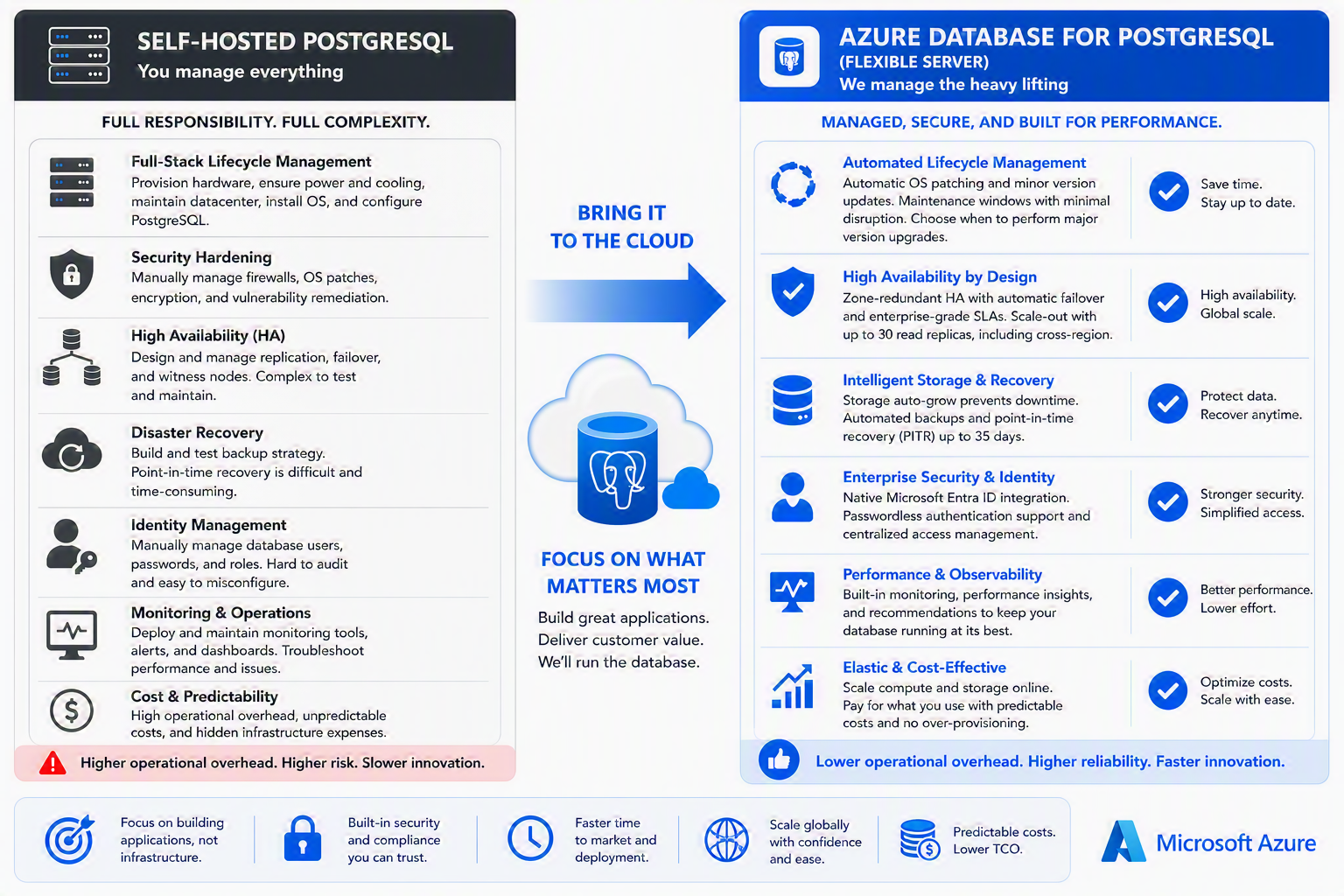
Managed PostgreSQL vs. self-hosted PostgreSQL: Key benefits and trade-offs
Lauro Ojeda
Summary This post is for technical decision makers evaluating where to run production PostgreSQL workloads. It compares two valid operating models—self-managed PostgreSQL and a managed database service—through business and operational outcomes: control, engineering capacity, resi