
<p><a href="https://aws.amazon.com/rds/postgresql/" target="_blank" rel="noopener noreferrer">Amazon Relational Database Service (RDS) for PostgreSQL</a> now supports the latest minor versions 18.6, 17.11, 16.15, 15.19, and 14.24. We recommend that you upgrade to the latest minor versions to address Common Vulnerabilities and Exposures (CVEs) in prior versions of PostgreSQL, and to benefit from the bug fixes and improvements added by the PostgreSQL community.</p>
<p>You can upgrade your databases during scheduled maintenance windows using automatic minor version upgrades. To simplify operations at scale, enable automatic minor version upgrades and use the AWS Organizations <a href="https://docs.aws.amazon.com/AmazonRDS/latest/UserGuide/RDS.Maintenance.AMVU.UpgradeRollout.html" target="_blank" rel="noopener noreferrer">Upgrade Rollout Policy</a> to orchestrate multiple upgrades in phases, validating on lower-priority environments before upgrading your most critical ones. You can also use Amazon RDS Blue/Green deployments to minimize downtime for minor version upgrades. For more information, see <a href="https://docs.aws.amazon.com/AmazonRDS/latest/UserGuide/USER_UpgradeDBInstance.PostgreSQL.html" target="_blank" rel="noopener noreferrer">Upgrading RDS for PostgreSQL DB engine</a>. </p>
<p>Amazon RDS for PostgreSQL makes it simple to set up, operate, and scale PostgreSQL deployments in the cloud. See <a href="https://aws.amazon.com/rds/postgresql/pricing/" target="_blank" rel="noopener noreferrer">Amazon RDS for PostgreSQL Pricing</a> for pricing details and regional availability. Create or update a fully managed Amazon RDS database in the <a href="https://console.aws.amazon.com/rds/" target="_blank" rel="noopener noreferrer">Amazon RDS Management Console</a> or by using the AWS Command Line Interface (CLI).</p>
Amazon RDS for PostgreSQL supports minor versions 18.6, 17.11, 16.15, 15.19, and 14.24
Amazon Relational Database Service (RDS) for PostgreSQL now supports the latest minor versions 18.6, 17.11, 16.15, 15.19, and 14.24. We recommend that you upgrade to the latest minor versions to address Common Vulnerabilities and Exposures (CVEs) in prior versions of PostgreSQL,

Unsplash (free commercial use)
Related stories

Anthropic pushes into physical world with new standard to help AI agents operate machines - CNBC
Anthropic News
Anthropic pushes into physical world with new standard to help AI agents operate machines CNBC

AWS Elastic Disaster Recovery introduces Recovery Plans for orchestrated application recovery
AWS What’s New
AWS Elastic Disaster Recovery (AWS DRS) now offers Recovery Plans, a capability that automates the sequential launch of multi-server applications during recovery and drills. Instead of launching servers one at a time and tracking dependencies manually, you define the recovery seq

Giga-Scale AI and the Ethernet Evolution: How Spectrum-X Ethernet Rewrites the Rules
NVIDIA Developer Blog
The massive growth of generative AI has fundamentally altered data center design. As distributed model training scales to span hundreds of thousands of GPUs,... The massive growth of generative AI has fundamentally altered data center design. As distributed model training scales

How AI Coding Agents Can Unlock Materials Simulation with NVIDIA ALCHEMI Toolkit
NVIDIA Developer Blog
Atomistic simulation requires three things: knowledge of the science, compute-efficient implementation of simulations, and accessible interfaces to the... Atomistic simulation requires three things: knowledge of the science, compute-efficient implementation of simulations, and ac

How we saved 100 terabytes of memory by optimizing 1.1.1.1’s DNS cache
Sebastiaan Neuteboom
Big Pineapple , the platform behind 1.1.1.1 , Gateway DNS , DNS Firewall , AS112 , and several other Cloudflare DNS services, stores over 250 billion DNS cache entries at any given time. At that scale, wasting a single byte per entry costs more than 250 gigabytes of memory across
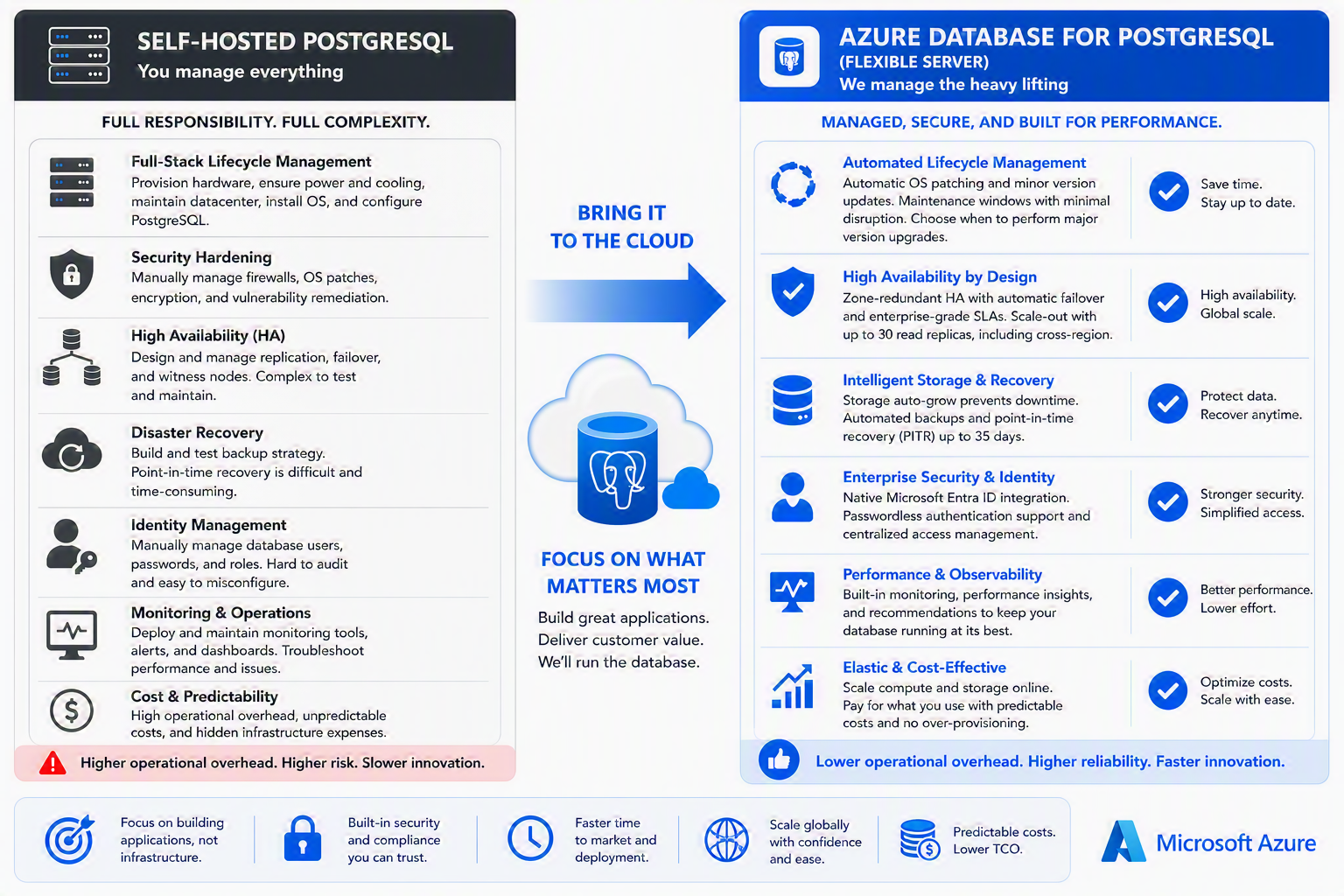
Managed PostgreSQL vs. self-hosted PostgreSQL: Key benefits and trade-offs
Lauro Ojeda
Summary This post is for technical decision makers evaluating where to run production PostgreSQL workloads. It compares two valid operating models—self-managed PostgreSQL and a managed database service—through business and operational outcomes: control, engineering capacity, resi