
<p>Amazon CloudWatch now offers basic OpenTelemetry enrichment for AWS service metrics at no additional cost. Basic enrichment turns the metrics that AWS services publish to CloudWatch into OpenTelemetry data points you can query with PromQL. It covers metrics that identify a resource, such as Amazon EC2 CPUUtilization with an InstanceId dimension. Enriched metrics get resource attributes for the Amazon Resource Name, cloud provider, Region, and account ID, plus an instrumentation scope naming the source service. Your original CloudWatch dimensions become data point attributes.</p>
<p>To query AWS resource tags as PromQL labels, choose resource tag enrichment instead. It is charged as OTel Vended Metric Enrichment, and you can switch levels at any time. Your AWS service metrics stay available through existing CloudWatch APIs.</p>
<p>When you set up CloudWatch Omni, basic enrichment is enabled by default, so you can query your AWS service metrics with PromQL right away. Any account can also enable it directly in the CloudWatch console, AWS Command Line Interface, or the AWS SDKs. Basic enrichment is available in all AWS Regions where CloudWatch OpenTelemetry metrics are supported. To learn more, see <a title="AWS vended metrics in OpenTelemetry format with PromQL querying" href="https://docs.aws.amazon.com/AmazonCloudWatch/latest/monitoring/CloudWatch-OTelEnrichment.html">AWS vended metrics in OpenTelemetry format</a>. For pricing, see <a title="CloudWatch pricing" href="https://aws.amazon.com/cloudwatch/pricing/">Amazon CloudWatch pricin</a>g.</p>
Amazon CloudWatch announces basic OpenTelemetry enrichment at no additional cost

From the official release
This is a short excerpt. Read the full announcement on the official source.
Continue on aws.amazon.com → (opens in a new window)Related stories
Amazon Timestream for InfluxDB 3 now supports heterogeneous clusters
AWS What’s New
Amazon Timestream for InfluxDB 3 now supports heterogeneous clusters, which let you assign a different instance size to each node role in an InfluxDB 3 Enterprise cluster. You can size the writer, reader, and compactor roles independently. You set the size for each role when you
Amazon Neptune introduces Neptune Graph Sessions, smaller graphs designed for agents that scale to zero and resume automatically
AWS What’s New
Amazon Neptune now supports Neptune Graph Sessions, a compute mode designed for agents that scales memory and CPU automatically and scales to zero when idle. You can give each agent, user or task its own graph without paying for the 16 m-NCU minimum of a provisioned graph. You ch

Taking Trainium3 to the Track: Generating Videos with LTX-2.5
Hugging Face Blog
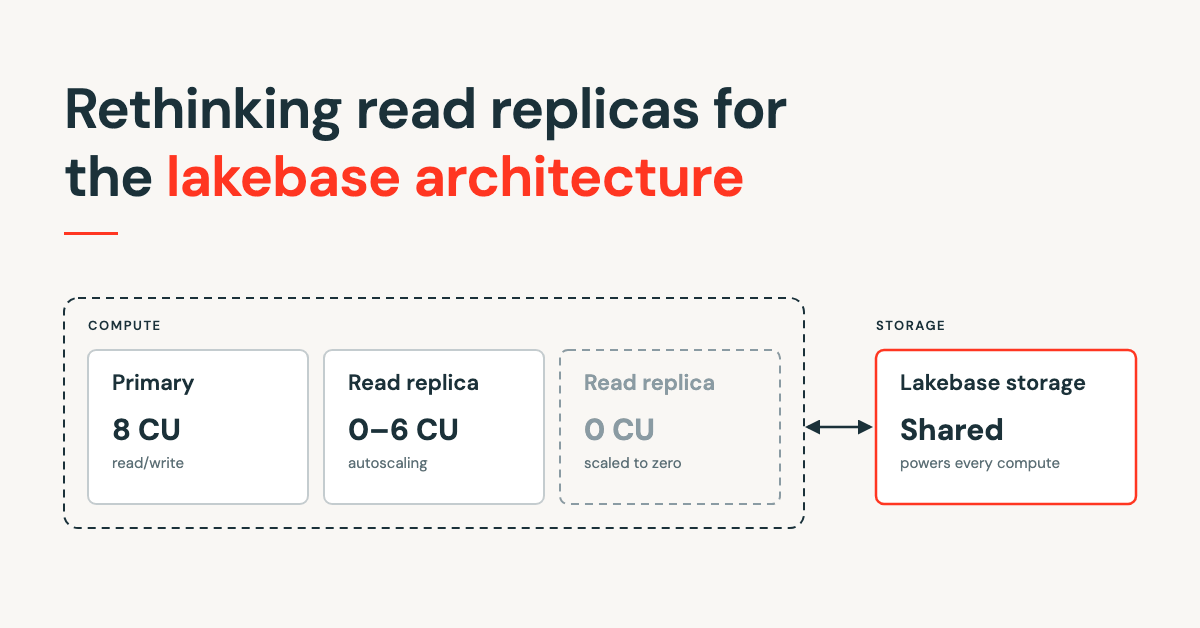
Rethinking read replicas for the lakebase architecture
Databricks Blog
The idea behind read replicas makes sense: when your app gets busy, you add a couple...

Introducing the llama.cpp benchmark dashboard for AMD Ryzen and Radeon
Hugging Face Blog

Building on Nemotron 3.5 Parse: Open Data, Fine-Tuning, and Faster Inference
Hugging Face Blog