
<p>Amazon Timestream for InfluxDB 3 now supports heterogeneous clusters, which let you assign a different instance size to each node role in an InfluxDB 3 Enterprise cluster. You can size the writer, reader, and compactor roles independently. You set the size for each role when you create a cluster or add nodes to an existing cluster, using the Amazon Timestream console, the AWS Command Line Interface (CLI), or the AWS SDKs.</p>
<p>Time series workloads rarely load every part of a database the same way. Queries need memory for the query cache, writes are gated by durable flushes to object storage, and compaction needs vCPUs to merge files in the background. Because every node previously ran one instance size, scaling a single role meant scaling all of them and paying for headroom on nodes already sized correctly. You can now place reader nodes on a larger size for a bigger cache or more complex queries while keeping writer nodes smaller, or give the compactor more vCPUs without changing the rest of the cluster.</p>
<p>There is no additional charge, and you pay the standard price for each node at the size you select. Heterogeneous clusters are available for InfluxDB 3 Enterprise clusters in all AWS <a href="https://docs.aws.amazon.com/general/latest/gr/timestream.html">Regions</a> where Amazon Timestream for InfluxDB is available. To get started, open the Amazon Timestream console. For more information, see the <a href="https://docs.aws.amazon.com/timestream/">Amazon Timestream for InfluxDB documentation</a> and <a href="https://aws.amazon.com/timestream/pricing/">pricing page</a>.</p>
Amazon Timestream for InfluxDB 3 now supports heterogeneous clusters

From the official release
This is a short excerpt. Read the full announcement on the official source.
Continue on aws.amazon.com → (opens in a new window)Related stories
Amazon CloudWatch announces basic OpenTelemetry enrichment at no additional cost
AWS What’s New
Amazon CloudWatch now offers basic OpenTelemetry enrichment for AWS service metrics at no additional cost. Basic enrichment turns the metrics that AWS services publish to CloudWatch into OpenTelemetry data points you can query with PromQL. It covers metrics that identify a resour
Amazon Neptune introduces Neptune Graph Sessions, smaller graphs designed for agents that scale to zero and resume automatically
AWS What’s New
Amazon Neptune now supports Neptune Graph Sessions, a compute mode designed for agents that scales memory and CPU automatically and scales to zero when idle. You can give each agent, user or task its own graph without paying for the 16 m-NCU minimum of a provisioned graph. You ch

Taking Trainium3 to the Track: Generating Videos with LTX-2.5
Hugging Face Blog

Come for the Games, Stay for the Community With GeForce NOW
NVIDIA Newsroom
Good games bring people together. This GFN Thursday, GeForce NOW is celebrating the members, creators and community moderators who turn every session into something worth sharing. From friendships formed in online lobbies to new worlds explored on everyday devices, GeForce NOW Am
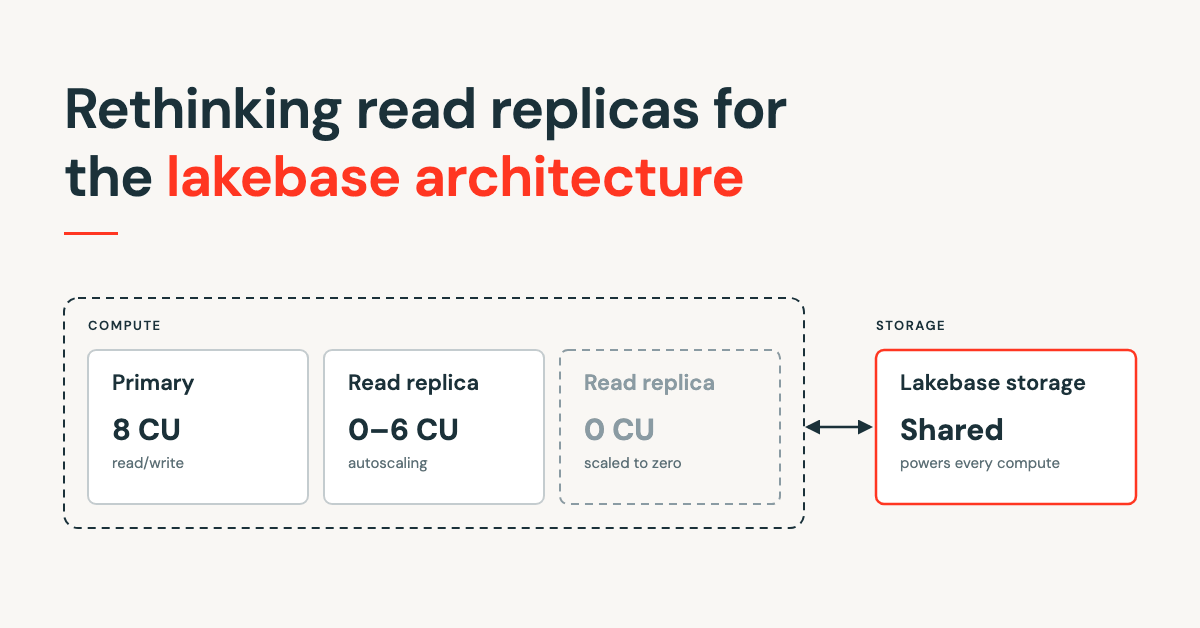
Rethinking read replicas for the lakebase architecture
Databricks Blog
The idea behind read replicas makes sense: when your app gets busy, you add a couple...

Introducing the llama.cpp benchmark dashboard for AMD Ryzen and Radeon
Hugging Face Blog