
<p>For organizations that use Amazon Quick, the desktop application now signs users in with the same sign-in method the organization already uses for Quick on the web. Administrators no longer need to register an OIDC application in their identity provider or set up separate desktop sign-in before users can get started. If a user can sign in to Quick on the web, that user can sign in to the desktop application.</p>
<p>To turn on desktop access, an administrator adds the desktop connector once in the Amazon Quick console. Users then enter their Quick account name, choose Sign In, and finish signing in through their browser. This works for accounts that use IAM Identity Center, IAM federation, or native Amazon Quick users. If your organization wants to manage desktop sign-in separately, you can still set up a dedicated identity provider configuration with providers such as Microsoft Entra ID, Google Workspace, Okta, or Ping Identity.</p>
<p>Amazon Quick on desktop is available in <a href="https://docs.aws.amazon.com/quick/latest/userguide/regions.html#regions-qs" target="_blank">AWS Regions that support the full Amazon Quick feature set</a>.</p>
<p>To get started, see <a href="https://docs.aws.amazon.com/quick/latest/userguide/amazon-quick-desktop.html">Amazon Quick on desktop</a> in the Amazon Quick User Guide.</p>
Amazon Quick on desktop now uses your organization's existing Amazon Quick sign-in

From the official release
This is a short excerpt. Read the full announcement on the official source.
Continue on aws.amazon.com → (opens in a new window)Related stories

Diagnose Distributed AI Workload Failures with NVIDIA Attribution
NVIDIA Developer Blog
In distributed AI workloads, a single error can produce a cascade of symptoms. A GPU or fabric event may surface as NCCL errors on other ranks, scheduler state... In distributed AI workloads, a single error can produce a cascade of symptoms. A GPU or fabric event may surface as N

Keep Distributed Training Running with Automated Workload Recovery
NVIDIA Developer Blog
As distributed AI training scales, failures across hardware and software dependencies increasingly disrupt training progress, making fast, reliable recovery... As distributed AI training scales, failures across hardware and software dependencies increasingly disrupt training prog
Haiku 5.5 now available on Kiro in AWS GovCloud (US)
AWS What’s New
A new Anthropic model is now available in the Kiro IDE and CLI for the AWS GovCloud (US) Regions. With Haiku 5.5, all three Claude 5.5 models are now available in Kiro in AWS GovCloud (US). Claude Haiku 5.5 is the fastest model in the Claude 5.5 family. It's a clear step up from

3 Ways to Boost MoE Inference on NVIDIA DGX Spark
NVIDIA Developer Blog
Generating tokens faster starts with identifying what limits inference performance. In the batch-size-1 evaluation of Ling-3.0-flash from Inclusion AI on NVIDIA... Generating tokens faster starts with identifying what limits inference performance. In the batch-size-1 evaluation o
Amazon RDS now supports per snapshot billing
AWS What’s New
Starting today, Amazon RDS supports per snapshot billing for Amazon RDS snapshots. Per snapshot billing allows you to get the cost of each individual snapshot. Previously, RDS snapshot charges were aggregated at the database instance level on the Cost and Usage report as well as
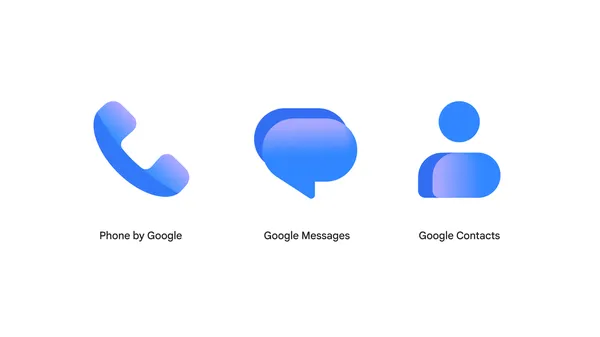
Google Messages, Phone by Google, and Google Contacts get new, updated icons.
Google Android Blog
Google is updating the icons for Messages, Phone, and Contacts with a sleeker, cohesive design. See the new look for your home screen.