
[
Official announcementHugging Face Blog
Quantization-Aware Healing: a compressed, 4-bit model that outperforms its full-precision original

Pexels (free commercial use)
MultiverseComputingCAI/Hypernova-60B-2605 Text Generation • 59B • Updated 20 days ago • 3.98k • 17
](/MultiverseComputingCAI/Hypernova-60B-2605)[
openai/gpt-oss-120b Text Generation • 117B • Updated Aug 26, 2025 • 5.17M • 5.13k
](/openai/gpt-oss-120b)
## Papers mentioned in this article 1
More from this author
[
Making Knowledge Distillation Cheap Enough to Run at Scale
-
-
39
August 10, 2026
](/blog/MultiverseComputingCAI/efficient-knowledge-distillation)
Community
Making a large language model smaller almost always comes with a cost. The now-standard recipe for efficient deployment is to compress the architecture first, cutting the parameter count by removing layers, heads, or neurons, and then quantize the remaining weights down to 4 bits to shrink memory and compute further. Both steps save a lot, but together they systematically degrade the capabilities people actually care about: reasoning, mathematical problem-solving, and code generation. Because of this, serious deployment pipelines add a recovery step, usually called healing, before the model goes into production. Recent open-weight releases such as <a href=\"https://www.rbtv77plus.app/\">rbtv77</a> gpt-oss, NVIDIA's Nemotron family, and our own Hypernova 60B all rely on some version of this compress-then-heal approach.\n\nThis is a really fascinating take on model compression 🤯🔥. The idea that a 4-bit model can actually outperform the full-precision version turns the usual assumption about quantization completely upside down.... Instead of simply accepting the accuracy loss that comes with compression, QAH seems to show how targeted recovery can bring back—and even improve—important capabilities like reasoning, math, and coding. 🧠⚡\n\nWhat really caught my attention is the result with the compressed GPT-OSS 120B → 60B model.... Getting a smaller MXFP4 model to beat its own bfloat16 checkpoint on 7 of 9 benchmarks is pretty impressive. 📊🚀 It makes the whole compress-then-heal pipeline feel much more practical for real-world deployment, especially when memory usage and inference costs matter.\n\nI also like the broader implication here.... Quantization doesn't necessarily have to mean sacrificing model quality if the recovery process is designed with the quantized model in mind. 💡🔧 A smaller model that costs less to operate while still delivering stronger benchmark performance could be a huge advantage for teams trying to deploy capable LLMs efficiently.\n\nDefinitely an interesting direction for efficient AI deployment.... Turning a heavily compressed 4-bit model into something that can outperform its larger full-precision counterpart is the kind of result that makes you rethink what \"compression\" actually means. 👏🔥 Really curious to see how far Quantization-Aware Healing can go across other architectures and workloads.... 🚀🧠","html":"<blockquote>\n<p>Making a large language model smaller almost always comes with a cost. The now-standard recipe for efficient deployment is to compress the architecture first, cutting the parameter count by removing layers, heads, or neurons, and then quantize the remaining weights down to 4 bits to shrink memory and compute further. Both steps save a lot, but together they systematically degrade the capabilities people actually care about: reasoning, mathematical problem-solving, and code generation. Because of this, serious deployment pipelines add a recovery step, usually called healing, before the model goes into production. Recent open-weight releases such as <a href=\"https://www.rbtv77plus.app/\" rel=\"nofollow\">rbtv77</a> gpt-oss, NVIDIA's Nemotron family, and our own Hypernova 60B all rely on some version of this compress-then-heal approach.</p>\n</blockquote>\n<p>This is a really fascinating take on model compression 🤯🔥. The idea that a 4-bit model can actually outperform the full-precision version turns the usual assumption about quantization completely upside down.... Instead of simply accepting the accuracy loss that comes with compression, QAH seems to show how targeted recovery can bring back—and even improve—important capabilities like reasoning, math, and coding. 🧠⚡</p>\n<p>What really caught my attention is the result with the compressed GPT-OSS 120B → 60B model.... Getting a smaller MXFP4 model to beat its own bfloat16 checkpoint on 7 of 9 benchmarks is pretty impressive. 📊🚀 It makes the whole compress-then-heal pipeline feel much more practical for real-world deployment, especially when memory usage and inference costs matter.</p>\n<p>I also like the broader implication here.... Quantization doesn't necessarily have to mean sacrificing model quality if the recovery process is designed with the quantized model in mind. 💡🔧 A smaller model that costs less to operate while still delivering stronger benchmark performance could be a huge advantage for teams trying to deploy capable LLMs efficiently.</p>\n<p>Definitely an interesting direction for efficient AI deployment.... Turning a heavily compressed 4-bit model into something that can outperform its larger full-precision counterpart is the kind of result that makes you rethink what \"compression\" actually means. 👏🔥 Really curious to see how far Quantization-Aware Healing can go across other architectures and workloads.... 🚀🧠</p>\n","updatedAt":"2026-08-25T12:20:27.487Z","author":{"_id":"6a3cd0fb3af2b0b0921e329a","avatarUrl":"https://cdn-avatars.huggingface.co/v1/production/uploads/noauth/1Yp81w2J8OBsuzrHcQoZu.jpeg","fullname":"Elton Williams","name":"eltonwilliams","type":"user","isPro":false,"isHf":false,"isHfAdmin":false,"isMod":false,"followerCount":1,"isUserFollowing":false}},"numEdits":0,"identifiedLanguage":{"language":"en","probability":0.9268456697463989},"editors":["eltonwilliams"],"editorAvatarUrls":["https://cdn-avatars.huggingface.co/v1/production/uploads/noauth/1Yp81w2J8OBsuzrHcQoZu.jpeg"],"reactions":[],"isReport":false}}],"status":"open","isReport":false,"pinned":false,"locked":false,"collection":"community_blogs"},"contextAuthors":["AntonioTN","Iker","ali-hashemi","bryskulov-mc"],"primaryEmailConfirmed":false,"discussionRole":0,"acceptLanguages":["*"],"withThread":true,"cardDisplay":false,"repoDiscussionsLocked":false,"hideComments":true}">
Making a large language model smaller almost always comes with a cost. The now-standard recipe for efficient deployment is to compress the architecture first, cutting the parameter count by removing layers, heads, or neurons, and then quantize the remaining weights down to 4 bits to shrink memory and compute further. Both steps save a lot, but together they systematically degrade the capabilities people actually care about: reasoning, mathematical problem-solving, and code generation. Because of this, serious deployment pipelines add a recovery step, usually called healing, before the model goes into production. Recent open-weight releases such as rbtv77 gpt-oss, NVIDIA's Nemotron family, and our own Hypernova 60B all rely on some version of this compress-then-heal approach.
This is a really fascinating take on model compression 🤯🔥. The idea that a 4-bit model can actually outperform the full-precision version turns the usual assumption about quantization completely upside down.... Instead of simply accepting the accuracy loss that comes with compression, QAH seems to show how targeted recovery can bring back—and even improve—important capabilities like reasoning, math, and coding. 🧠⚡
What really caught my attention is the result with the compressed GPT-OSS 120B → 60B model.... Getting a smaller MXFP4 model to beat its own bfloat16 checkpoint on 7 of 9 benchmarks is pretty impressive. 📊🚀 It makes the whole compress-then-heal pipeline feel much more practical for real-world deployment, especially when memory usage and inference costs matter.
I also like the broader implication here.... Quantization doesn't necessarily have to mean sacrificing model quality if the recovery process is designed with the quantized model in mind. 💡🔧 A smaller model that costs less to operate while still delivering stronger benchmark performance could be a huge advantage for teams trying to deploy capable LLMs efficiently.
Definitely an interesting direction for efficient AI deployment.... Turning a heavily compressed 4-bit model into something that can outperform its larger full-precision counterpart is the kind of result that makes you rethink what "compression" actually means. 👏🔥 Really curious to see how far Quantization-Aware Healing can go across other architectures and workloads.... 🚀🧠
See translation
Reply
EditPreview
Upload images, audio, and videos by dragging in the text input, pasting, or clicking here.
Tap or paste here to upload images
Comment · [Sign up](/join?next=%2Fblog%2FMultiverseComputingCAI%2Fquantization-aware-healing) or [log in](/login?next=%2Fblog%2FMultiverseComputingCAI%2Fquantization-aware-healing) to comment
[ Upvote 21
](/login?next=%2Fblog%2FMultiverseComputingCAI%2Fquantization-aware-healing) - [
- ](/hizium)
- [
- ](/wattai)
- [
- ](/Esherrill)
- [
- ](/technigmaai)
- [
- ](/alihashemi-ai)
- [
- ](/WordleMike)
- [
- ](/cuttie1979)
- [
- ](/AntonioTN)
- [
- ](/Tugay31)
- [
- ](/jlcanta)
- [
- ](/AlejoMVC)
- [
- ](/peculiar-ragdoll)
- +9
Models mentioned in this article 2
Papers mentioned in this article 1
[ Quantization-Aware Healing: A Practical Recipe for Recovering Compressed, 4-Bit LLMs Paper • 2608.20953 • Published 7 days ago • 10
](/papers/2608.20953)
Related stories
News summary
Anthropic pushes into physical world with new standard to help AI agents operate machines - CNBC
Anthropic News
Anthropic pushes into physical world with new standard to help AI agents operate machines CNBC

Official announcement
AWS Elastic Disaster Recovery introduces Recovery Plans for orchestrated application recovery
AWS What’s New
AWS Elastic Disaster Recovery (AWS DRS) now offers Recovery Plans, a capability that automates the sequential launch of multi-server applications during recovery and drills. Instead of launching servers one at a time and tracking dependencies manually, you define the recovery seq

Official announcement
Giga-Scale AI and the Ethernet Evolution: How Spectrum-X Ethernet Rewrites the Rules
NVIDIA Developer Blog
The massive growth of generative AI has fundamentally altered data center design. As distributed model training scales to span hundreds of thousands of GPUs,... The massive growth of generative AI has fundamentally altered data center design. As distributed model training scales

Official announcement
How AI Coding Agents Can Unlock Materials Simulation with NVIDIA ALCHEMI Toolkit
NVIDIA Developer Blog
Atomistic simulation requires three things: knowledge of the science, compute-efficient implementation of simulations, and accessible interfaces to the... Atomistic simulation requires three things: knowledge of the science, compute-efficient implementation of simulations, and ac
Official announcement
Samsung Introduces New Odyssey Lineup for Fast-Paced Gaming at Gamescom 2026
Samsung Newsroom
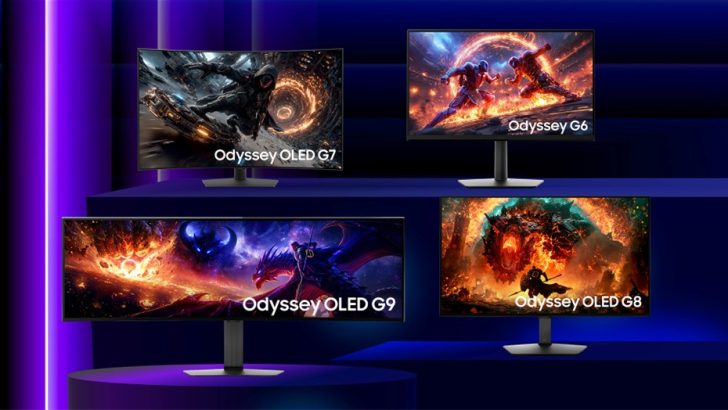
Samsung Electronics today announced its 2027 Odyssey gaming monitor lineup at Gamescom 2026, the world’s largest gaming event, being held in Cologne, Germany from Aug. 26-30. The new lineup introduces multiple Odyssey models that feature world-first innovations, empowering player

Official announcement
How we saved 100 terabytes of memory by optimizing 1.1.1.1’s DNS cache
Sebastiaan Neuteboom
Big Pineapple , the platform behind 1.1.1.1 , Gateway DNS , DNS Firewall , AS112 , and several other Cloudflare DNS services, stores over 250 billion DNS cache entries at any given time. At that scale, wasting a single byte per entry costs more than 250 gigabytes of memory across