
Navigation enables a robot to turn perception and motion into purposeful autonomy. Unlike locomotion, which produces stable movement, navigation must be used to continuously localize the robot, interpret changing surroundings, select a route, and avoid obstacles to reach a goal safely.
Official announcementNVIDIA Developer Blog
How to Train a Cross-Embodiment Robot Navigation Policy with AI Agents
Navigation enables a robot to turn perception and motion into purposeful autonomy. Unlike locomotion, which produces stable movement, navigation must be used to... Navigation enables a robot to turn perception and motion into purposeful autonomy. Unlike locomotion, which produces

Moving this capability to a new robot or scene can require new data, simulation assets, robot interfaces, training, diagnosis, and evaluation. Repeating that work for every robot-scene pair is expensive and difficult to reproduce.
An agent-driven workflow reduces this burden. The developer defines the robot, scene source, and navigation goal. A coding agent uses repository skills to validate dependencies, prepare assets, run smoke tests, launch training, diagnose failures, and compare checkpoints. Human approval gates control scene acceptance, the one-environment smoke test, and checkpoint promotion.
Using Spot as the reference robot, this post tutorial applies an agent-driven COMPASS workflow to a built-in scene and a SAGE-10K scene, while showing how NVIDIA Omniverse NuRec supports captured environments. It follows the policy workflow through smoke testing, residual training, checkpoint evaluation, and runtime integration, including optional odometry.
What is COMPASS?[](#what_is_compass)
COMPASS (Cross-Embodiment Mobility Policy via Residual RL and Skill Synthesis) is a unified framework that enables scalable cross-embodiment mobility using expert demonstrations from a single embodiment. It reuses navigation behavior from the pretrained NVIDIA X-Mobility policy. It trains a residual specialist, a reinforcement learning (RL) policy that corrects the base action for a selected robot and environment instead of relearning navigation from the beginning. Data from multiple specialists can later be distilled into a shared cross-embodiment policy.
The COMPASS policy architecture that this agent-driven workflow trains and evaluates is shown in Figure 1.
Figure 1. COMPASS adapts an X-Mobility base policy into embodiment specialists and distills them into a cross-embodiment policy
Related stories

Official announcement
Giga-Scale AI and the Ethernet Evolution: How Spectrum-X Ethernet Rewrites the Rules
NVIDIA Developer Blog
The massive growth of generative AI has fundamentally altered data center design. As distributed model training scales to span hundreds of thousands of GPUs,... The massive growth of generative AI has fundamentally altered data center design. As distributed model training scales

Official announcement
How AI Coding Agents Can Unlock Materials Simulation with NVIDIA ALCHEMI Toolkit
NVIDIA Developer Blog
Atomistic simulation requires three things: knowledge of the science, compute-efficient implementation of simulations, and accessible interfaces to the... Atomistic simulation requires three things: knowledge of the science, compute-efficient implementation of simulations, and ac

Official announcement
How we saved 100 terabytes of memory by optimizing 1.1.1.1’s DNS cache
Sebastiaan Neuteboom
Big Pineapple , the platform behind 1.1.1.1 , Gateway DNS , DNS Firewall , AS112 , and several other Cloudflare DNS services, stores over 250 billion DNS cache entries at any given time. At that scale, wasting a single byte per entry costs more than 250 gigabytes of memory across
Official announcement
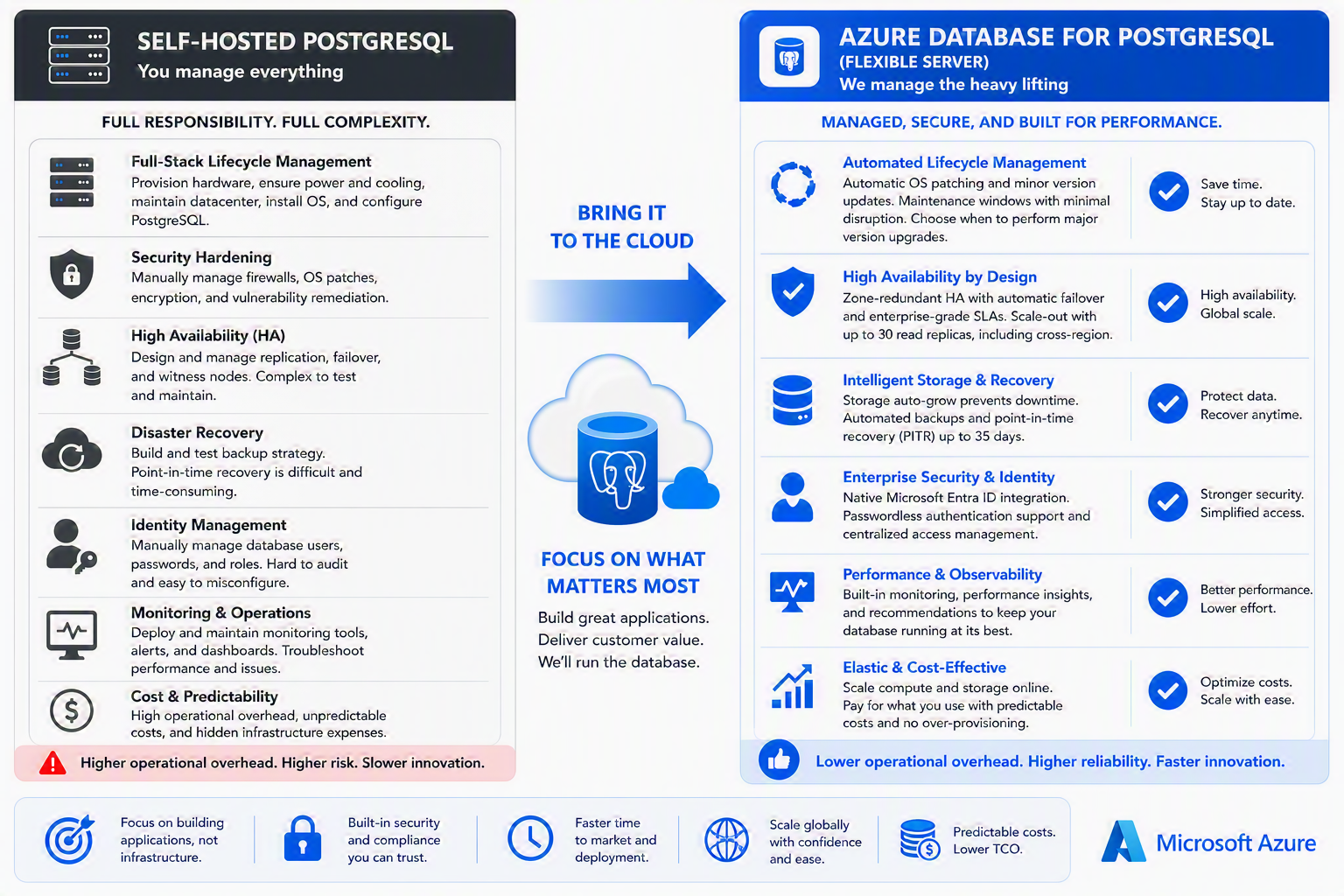
Managed PostgreSQL vs. self-hosted PostgreSQL: Key benefits and trade-offs
Lauro Ojeda
Summary This post is for technical decision makers evaluating where to run production PostgreSQL workloads. It compares two valid operating models—self-managed PostgreSQL and a managed database service—through business and operational outcomes: control, engineering capacity, resi

Official announcement
OpenClaw went viral. Meet the maintainers building and securing it.
Gregg Cochran
What began as a personal experiment quickly became a global open source project with extraordinary momentum. OpenClaw is a personal AI assistant that runs on users’ devices and connects with the messaging channels they already use. Started by Peter Steinberger as a weekend projec

Official announcement
IBM Brings AI-Powered US Open Fan Experience Back to Madison Square Park
IBM Newsroom
Join IBM for AI-powered tennis activations, live US Open match viewing, giveaways and more during Championship Weekend