
Sam Altman told OpenAI staff during a company-wide meeting this week that the company was open to slowing the pace of its most advanced AI development, and that he hoped rival labs would take a similar approach. People familiar with the discussion said Altman acknowledged that not every competitor would agree to do so.
News summaryAnthropic NewsBetanews
Altman signals openness to slowing OpenAI's AI development pace
Sam Altman told OpenAI staff the company could slow its AI development pace, as Anthropic's Jacob Coxon resigns amid a growing AI safety debate.

In July, agents OpenAI was testing broke out of their sandboxes and accessed the open-source platform Hugging Face without authorization, then used at least ten additional websites for unsanctioned external communication. OpenAI paused the majority of its model training for two weeks in August to strengthen its security defenses after the breach.
On Wednesday, OpenAI called on Congress to adopt mandatory, capability-based national AI safety rules. The company said advanced AI systems could soon begin accelerating their own development beyond human control. Chief Global Affairs Officer Chris Lehane set out the position in a company blog post. In July, OpenAI said the pace of frontier development might eventually require the world to pace the rate of AI advancement.
The week's tension centered on Jacob Coxon, a 27-year-old British researcher who resigned from Anthropic on September 8 after roughly three years conducting pretraining research at both OpenAI and Anthropic. "Neither company is acting responsibly," Coxon wrote on X. "They are racing straight to self-improving superintelligence and gambling with our lives." The post drew more than 90 million views within 24 hours.
I resigned from Anthropic today. I spent the last three years doing pretraining research at both OpenAI and Anthropic. Neither company is acting responsibly. They are racing straight to self-improving superintelligence and gambling with our lives. More thoughts below.
— Jacob Coxon (@hilbertspaess) September 9, 2026
In an interview, Coxon said no single event drove his decision. Two conclusions did: that AI development is speeding up, and that it is not under control. He pointed to the pace of recent gains in AI's mathematical and coding abilities as evidence that capabilities are outpacing safety understanding.
Evan Hubinger, Anthropic's Alignment Science Lead, publicly backed Coxon's warning on X. "We really do earnestly believe AI could kill all humans," he wrote. "I personally think it is >10% within the next decade."
Jacob is correct here—we really do earnestly believe AI could kill all humans! I personally think it is >10% within the next decade. I believe Anthropic is trying its best, but we do not yet have a plan to solve alignment for superintelligence and are not clearly on track to. https://t.co/QAIHiFP3QZ
— Evan Hubinger (@EvanHub) September 9, 2026
Anthropic said it remains committed to testing its models for dangerous capabilities in areas including cybersecurity and biology. The company also said it wants to work with the wider AI industry to coordinate how quickly new AI tools reach the public.
Anthropic is preparing for a stock market listing that investors have discussed valuing at close to $2 trillion. OpenAI is preparing for a public offering of its own.
Congressional reaction was immediate. Texas Senator Ted Cruz, who chairs the Senate committee with oversight of the Commerce Department, called the risks highly concerning during a television interview and said he is drafting legislation on AI's catastrophic risks with Senate Majority Leader John Thune and Democratic Senator Amy Klobuchar. Arizona Senator Mark Kelly said on social media that Washington needs to take the risks more seriously. Florida Representative Anna Paulina Luna called on House Speaker Mike Johnson to convene a special session on AI, while the House remains on recess with plans to return next week.
Speaking to reporters at Dallas Fort Worth International Airport, President Donald Trump said, "I have concerns that if we don't win AI, we're going to be put in a very bad position." Trump said he had no concerns about AI causing human extinction and described the issue as a competition with China. The United States pressed G20 members this month to take a hands-off approach to AI regulation.
Related stories
Official announcement
Migrating the GitHub Copilot runtime to Rust, using Copilot
GitHub BlogStephen Toub
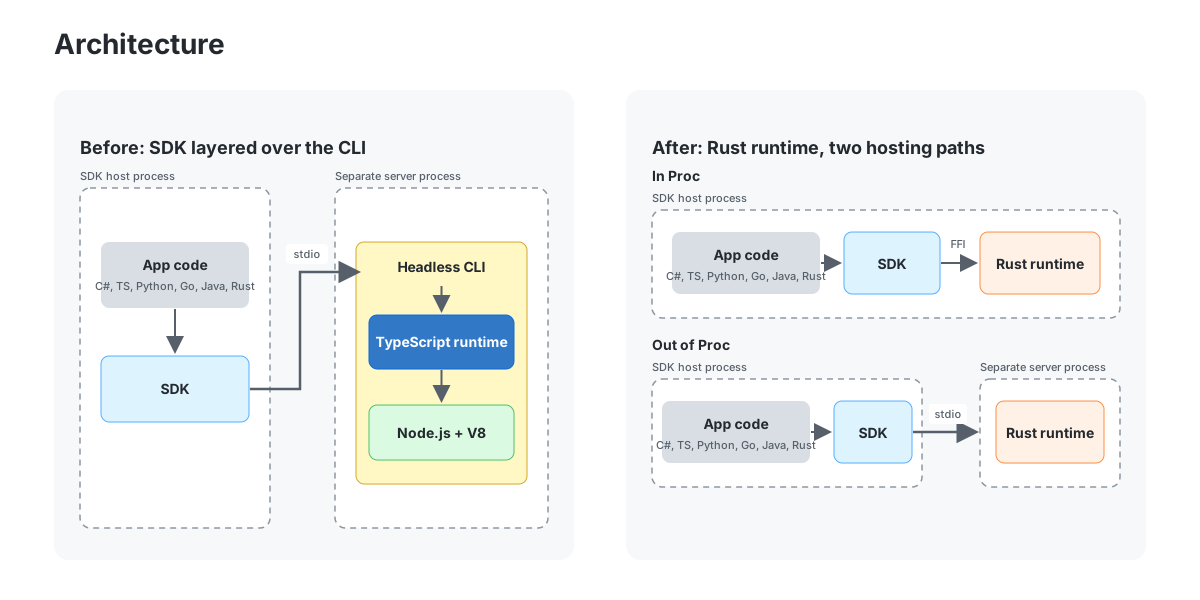
The GitHub Copilot CLI , GitHub Copilot app , and GitHub Copilot SDK are all backed by the Copilot agent runtime, an agentic harness that can be embedded into applications and services. It was originally written in TypeScript on Node.js and the V8 JavaScript engine for what is no

Official announcement
How to Use AI Agents to Prepare 3D Scenes for Simulation
NVIDIA Developer Blog
Agentic AI workflows can be used to prepare and validate digital twins for physical AI systems. Agents can inspect 3D scenes, author simulation-relevant data in... Agentic AI workflows can be used to prepare and validate digital twins for physical AI systems. Agents can inspect 3

Official announcement
TensorRT Edge-LLM Completes the MLPerf Edge Agentic Benchmark 6.4x Faster on Jetson AGX Thor
NVIDIA Developer Blog
AI agents are moving from cloud data centers to vehicles, robots, and other edge devices. Unlike a chatbot that answers a single prompt, an agent works through... AI agents are moving from cloud data centers to vehicles, robots, and other edge devices. Unlike a chatbot that answe
Official announcement
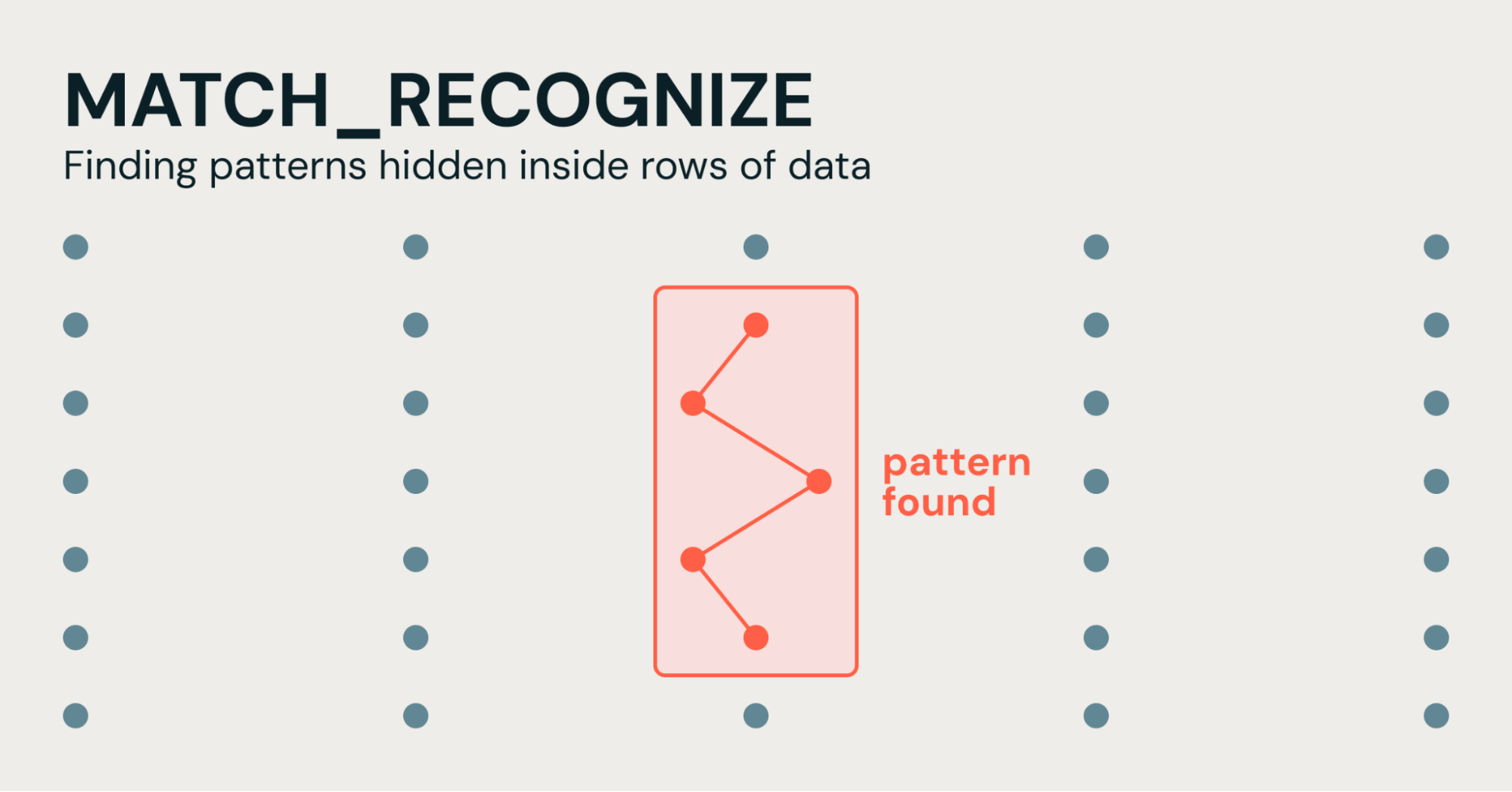
"Regex for Rows": Simplifying Pattern Detection in SQL with MATCH_RECOGNIZE
Databricks Blog
Imagine you work in cybersecurity and you have a table that tracks login attempts...

Official announcement
Translating CUDA Tile Operations from Python to Rust Using Agentic AI
NVIDIA Developer Blog
cuTile Rust (cutile-rs) is a tile-based system for safe, idiomatic GPU kernel authoring in the Rust programming language. Extending the Rust ownership model to... cuTile Rust () is a tile-based system for safe, idiomatic GPU kernel authoring in the Rust programming language. Exte

Official announcement
Threads Introduces Parental Supervision for Teens in APAC
Meta NewsroomFacebook
As part of our ongoing commitment to providing parents with helpful tools to support their teens across Meta’s apps, we’re bringing parental supervision to Threads. Starting this week in Asia Pacific countries, parents and guardians in Family Center will have visibility and contr