
<p>Today, we’re announcing <a href="https://aws.amazon.com/lambda/lambda-web-functions/">AWS Lambda Web Functions</a>, a new form factor that lets you run standard HTTP web applications on Lambda without rewriting your code into an event handler. You can take a standard port-listening server built with Express, Hono, Fastify, Next.js, or any Node.js framework, deploy it with a single command, and Lambda automatically handles scaling, multi-region distribution, and active CPU billing. No adapters, no infrastructure to manage, and no framework lock-in.</p>
<p>With this launch, AWS Lambda now offers three distinct form factors, each built on the same Firecracker isolation technology and designed for a different programming model.</p>
<p><strong>Lambda Event Functions</strong> are what you already know as Lambda functions. They use the event-driven, single-concurrent handler model with wall-clock billing. We’re introducing the “Event Functions” name to highlight that programming model: your function receives an event, processes it, and returns a response. The event-driven programming model is ideal for event processing, queue consumers, and invocations triggered by other AWS services.</p>
<p><strong>Lambda Web Functions</strong> use an HTTP-native programming model with multi-concurrent execution and active CPU billing. Your code listens on a port and handles standard HTTP requests. That programming model is ideal for web applications, API backends, and interactive HTTP workloads where multiple concurrent requests and I/O-heavy processing are the norm.</p>
<p><strong>Lambda MicroVMs</strong> provide isolated, stateful sandbox environments with customer-managed lifecycles for running untrusted or user-generated code.</p>
<p>The three complement each other. An application might use Event Functions for asynchronous backend processing, Web Functions for the user-facing API and server-side rendering layer, and MicroVMs for interactive code execution features, all within the same AWS account and sharing the same operational model.</p>
<p><span style="text-decoration: underline"><strong>Why Web Functions
<br> </strong></span>Modern web applications need to serve global audiences with fast, consistent response times while giving developers the freedom to use standard frameworks and iterate quickly. Building this today typically requires assembling multiple infrastructure components, configuring multi-region deployments, setting up latency-based routing, and tuning billing models to avoid paying for I/O wait. Developers often find themselves adapting their application code to fit a specific compute model rather than deploying the HTTP server they already have.</p>
<p>Lambda Web Functions removes this complexity. Each execution environment handles multiple requests simultaneously (up to 128 concurrent requests per environment), which means a burst of incoming traffic can share warm environments instead of mapping each request to a new one. Web Functions meter the CPU time your code uses, so time spent waiting on a database query or an API call consumes little CPU. Memory is metered for as long as the execution environment exists. For I/O-heavy web workloads like server-side rendering, API backends, and AI inference endpoints streaming token responses, this can reduce compute costs.</p>
<p><span style="text-decoration: underline"><strong>Let’s try it out
<br> </strong></span>To get started, I wrote a simple Express.js server. This is the same code I run locally with <code>node index.js</code>, no Lambda-specific adapters or wrappers required.</p>
<pre><code class="language-javascript">import express from 'express';
Announcing AWS Lambda Web Functions
From the official release
This is a short excerpt. Read the full announcement on the official source.
Continue on aws.amazon.com → (opens in a new window)Related stories

How our AI Research team uses AI Runtime
Databricks Blog
At Databricks, we continuously develop and evaluate new AI research techniques to...
Reducing the noise: How Atlassian built an OCSF security lakehouse on Databricks
Databricks Blog
The challenge: Two decades of logging noise at global scaleAtlassian is a global...
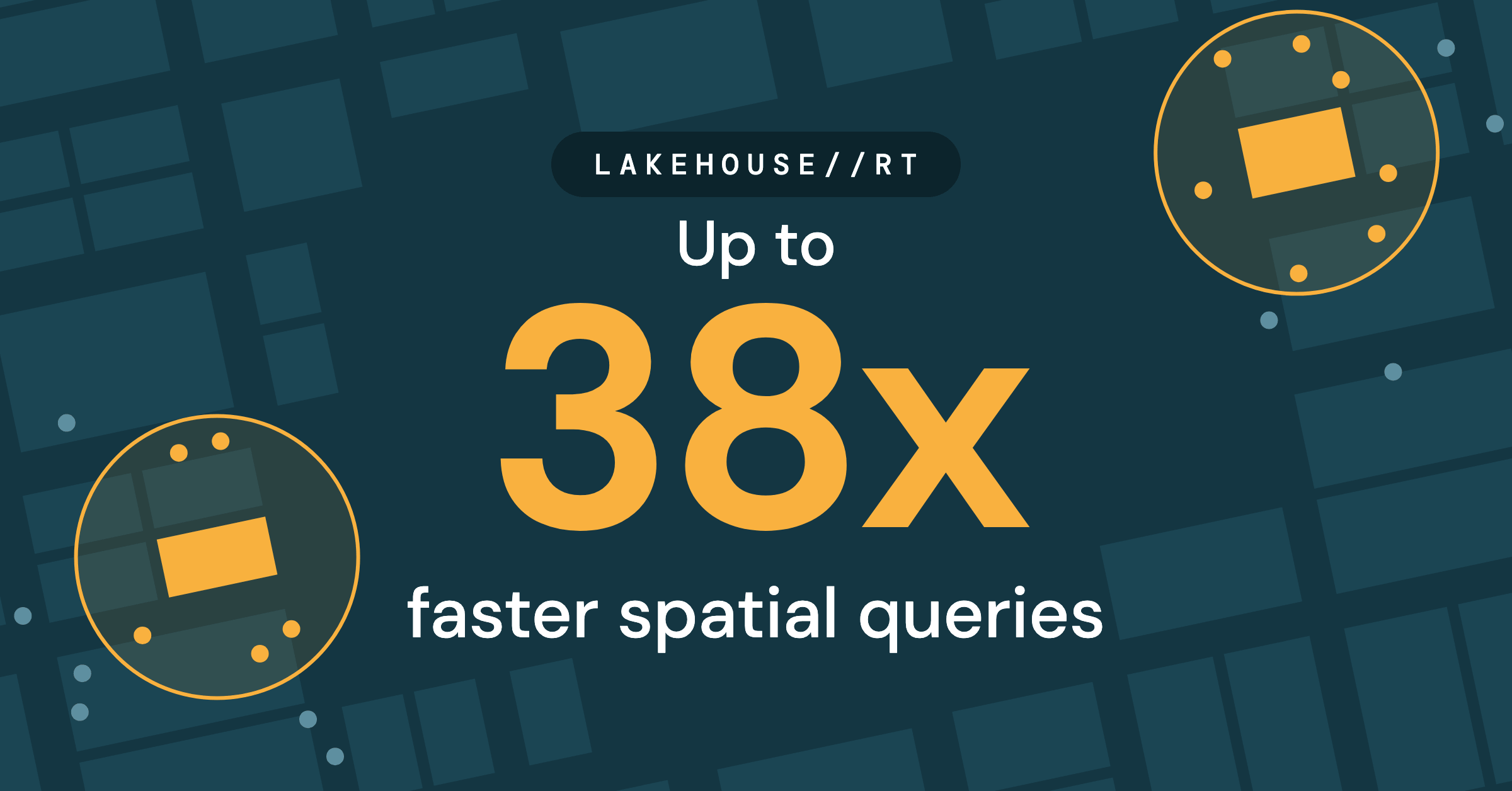
Geospatial queries are up to 38X faster with Lakehouse//RT
Databricks Blog
Spatial SQL and spatial joins now run on Lakehouse//RT and they're up to 38X faster...

Cloudflare and OpenAI: making AI discovery better for everyone
Cloudflare BlogMatthew Conroy
Optimizing your site for AI is of little use if AI can't find it. The answer to someone's question may already be on your website: the installation guide you spent a week writing, or a first-hand account of using a product, with the details that make the difference for whether th

Yandex outage: Data shows that instead of going dark, malicious bots went on the move
Cloudflare BlogMarina Elmore
Following reported strikes on Yandex data centers, claims circulated on the Internet that Russian bot farms and influence operations had been knocked offline. HTTP traffic charts showed steep drops, fueling speculation that the infrastructure damage had stopped these malicious ac
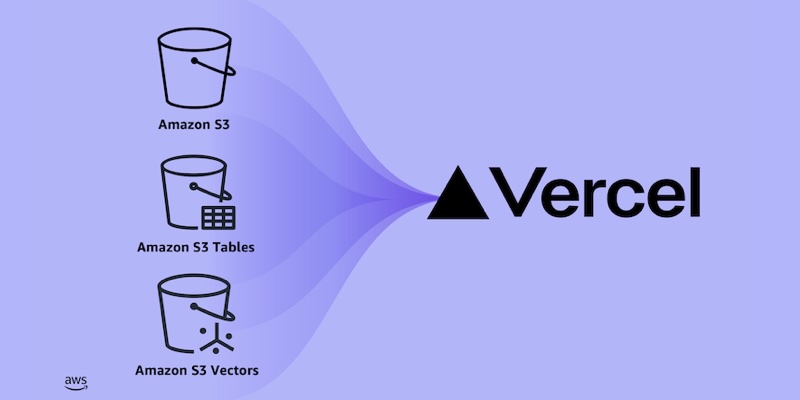
Amazon S3 is now available on the Vercel Marketplace and v0 by Vercel
AWS News BlogDaniel Abib
Developers building web and AI applications on Vercel can now add Amazon S3 storage resources directly from the Vercel Marketplace and v0, combining the durability, scalability, and performance of S3 with the convenience of Vercel’s provisioning workflow. Starting today, Amazon S