
Imagine this: you’ve just pushed a release. All the unit tests passed and your dashboards are green. You sit back to relax but then suddenly your phone starts blowing up: prod is broken.
Official announcementCloudflare BlogDoug Aaser
Probing DNS at Cloudflare

From the official release
This is something the Cloudflare DNS team has experienced firsthand. In one rollout of the service that publishes DNS records to our edge, a scheduling bug let some record changes sit unpublished for hours. The service stayed up and was healthy, but new hostnames were slow to resolve and certificates couldn't be issued until the bug was squashed.
DNS failures are hard to catch because they are slow, spread across the network, and partial in where they cause impact. We needed to figure out a way to test DNS the way customers experience it: constantly, from every data center, and against production.
This is a short excerpt. Read the full announcement on the official source.
Continue on blog.cloudflare.com → (opens in a new window)Related stories

Official announcement
Amazon Timestream for InfluxDB 3 now supports heterogeneous clusters
AWS What’s New
Amazon Timestream for InfluxDB 3 now supports heterogeneous clusters, which let you assign a different instance size to each node role in an InfluxDB 3 Enterprise cluster. You can size the writer, reader, and compactor roles independently. You set the size for each role when you
Official announcement
Amazon CloudWatch announces basic OpenTelemetry enrichment at no additional cost
AWS What’s New
Amazon CloudWatch now offers basic OpenTelemetry enrichment for AWS service metrics at no additional cost. Basic enrichment turns the metrics that AWS services publish to CloudWatch into OpenTelemetry data points you can query with PromQL. It covers metrics that identify a resour
Official announcement
Amazon Neptune introduces Neptune Graph Sessions, smaller graphs designed for agents that scale to zero and resume automatically
AWS What’s New
Amazon Neptune now supports Neptune Graph Sessions, a compute mode designed for agents that scales memory and CPU automatically and scales to zero when idle. You can give each agent, user or task its own graph without paying for the 16 m-NCU minimum of a provisioned graph. You ch

Official announcement
Taking Trainium3 to the Track: Generating Videos with LTX-2.5
Hugging Face Blog
Official announcement
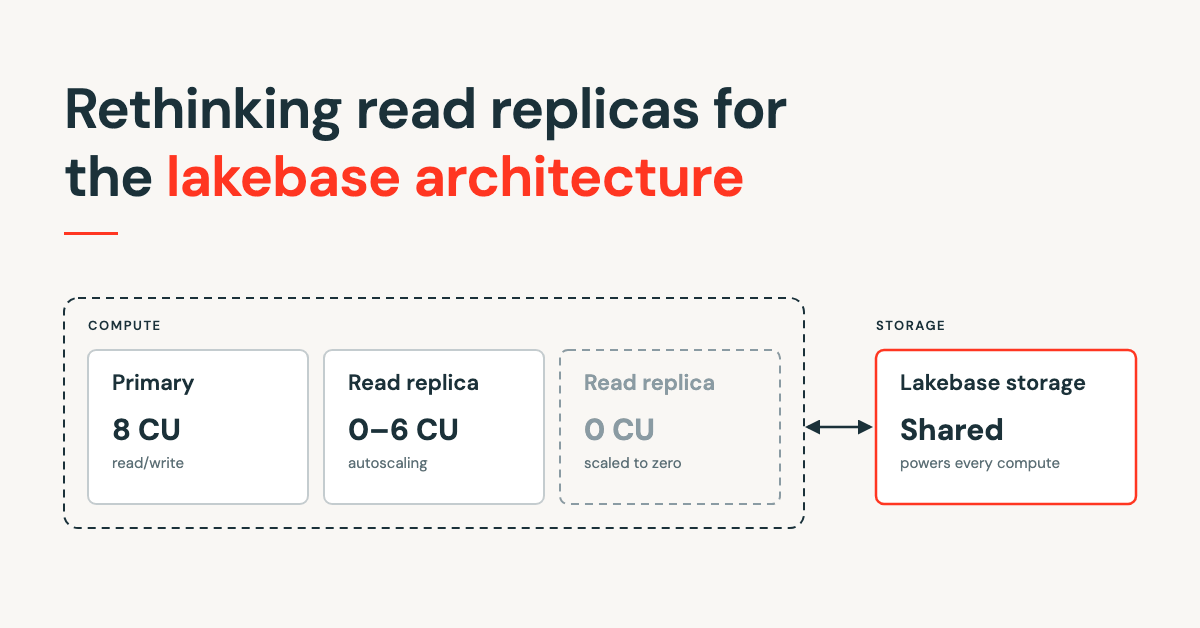
Rethinking read replicas for the lakebase architecture
Databricks Blog
The idea behind read replicas makes sense: when your app gets busy, you add a couple...

Official announcement
Introducing the llama.cpp benchmark dashboard for AMD Ryzen and Radeon
Hugging Face Blog