
Official announcementDatabricks Blog
Interactive Databricks Reference Architectures Across 70 Industries

From the official release
Most Databricks architecture talks used to start with the same slide: ingestion on the left, the lakehouse in the middle, BI and AI on the right. The slide is correct, but it doesn't specify where a bank's core banking ledger and SWIFT payment messages go. A hospital wants to know what happens to the HL7 messages from its electronic health record (EHR) system and to its DICOM medical images. A utility asks about smart meter reads and the SCADA data coming off the grid.
So people redrew the slide for each industry, and the copies drifted apart. They went out of date with every product release, lived on individual laptops, and there was no way to tell which one was current.
This is a short excerpt. Read the full announcement on the official source.
Continue on databricks.com → (opens in a new window)Related stories

Official announcement
Amazon Timestream for InfluxDB 3 now supports heterogeneous clusters
AWS What’s New
Amazon Timestream for InfluxDB 3 now supports heterogeneous clusters, which let you assign a different instance size to each node role in an InfluxDB 3 Enterprise cluster. You can size the writer, reader, and compactor roles independently. You set the size for each role when you
Official announcement
Amazon CloudWatch announces basic OpenTelemetry enrichment at no additional cost
AWS What’s New
Amazon CloudWatch now offers basic OpenTelemetry enrichment for AWS service metrics at no additional cost. Basic enrichment turns the metrics that AWS services publish to CloudWatch into OpenTelemetry data points you can query with PromQL. It covers metrics that identify a resour
Official announcement
Amazon Neptune introduces Neptune Graph Sessions, smaller graphs designed for agents that scale to zero and resume automatically
AWS What’s New
Amazon Neptune now supports Neptune Graph Sessions, a compute mode designed for agents that scales memory and CPU automatically and scales to zero when idle. You can give each agent, user or task its own graph without paying for the 16 m-NCU minimum of a provisioned graph. You ch

Official announcement
Taking Trainium3 to the Track: Generating Videos with LTX-2.5
Hugging Face Blog
Official announcement
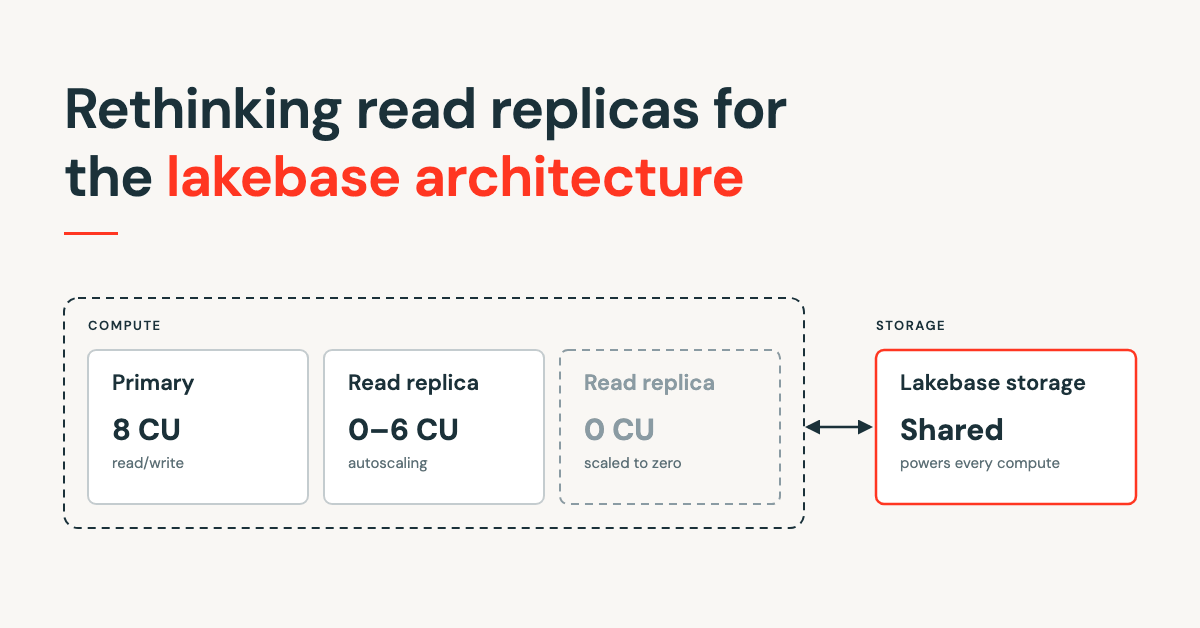
Rethinking read replicas for the lakebase architecture
Databricks Blog
The idea behind read replicas makes sense: when your app gets busy, you add a couple...

Official announcement
Introducing the llama.cpp benchmark dashboard for AMD Ryzen and Radeon
Hugging Face Blog