
Training a next-generation machine learning interatomic potential (MLIP) requires ground truth: tens to hundreds of millions of density functional theory (DFT) calculations of energies, forces, and stresses across diverse structures and chemistries.
Official announcementNVIDIA Developer Blog
Tackling GPU Bottlenecks in Plane-Wave DFT with K-Point Batching and Mixed Precision

From the official release
Plane-wave DFT, with VASP as its dominant implementation, is the gold standard for generating that data. It is accurate, well-validated across materials classes, and ubiquitous at the national labs and research institutions running these calculations at scale.
This is a short excerpt. Read the full announcement on the official source.
Continue on developer.nvidia.com → (opens in a new window)Related stories
Official announcement
Amazon Timestream for InfluxDB 3 now supports heterogeneous clusters
AWS What’s New
Amazon Timestream for InfluxDB 3 now supports heterogeneous clusters, which let you assign a different instance size to each node role in an InfluxDB 3 Enterprise cluster. You can size the writer, reader, and compactor roles independently. You set the size for each role when you
Official announcement
Amazon CloudWatch announces basic OpenTelemetry enrichment at no additional cost
AWS What’s New
Amazon CloudWatch now offers basic OpenTelemetry enrichment for AWS service metrics at no additional cost. Basic enrichment turns the metrics that AWS services publish to CloudWatch into OpenTelemetry data points you can query with PromQL. It covers metrics that identify a resour
Official announcement
Amazon Neptune introduces Neptune Graph Sessions, smaller graphs designed for agents that scale to zero and resume automatically
AWS What’s New
Amazon Neptune now supports Neptune Graph Sessions, a compute mode designed for agents that scales memory and CPU automatically and scales to zero when idle. You can give each agent, user or task its own graph without paying for the 16 m-NCU minimum of a provisioned graph. You ch

Official announcement
Taking Trainium3 to the Track: Generating Videos with LTX-2.5
Hugging Face Blog
Official announcement
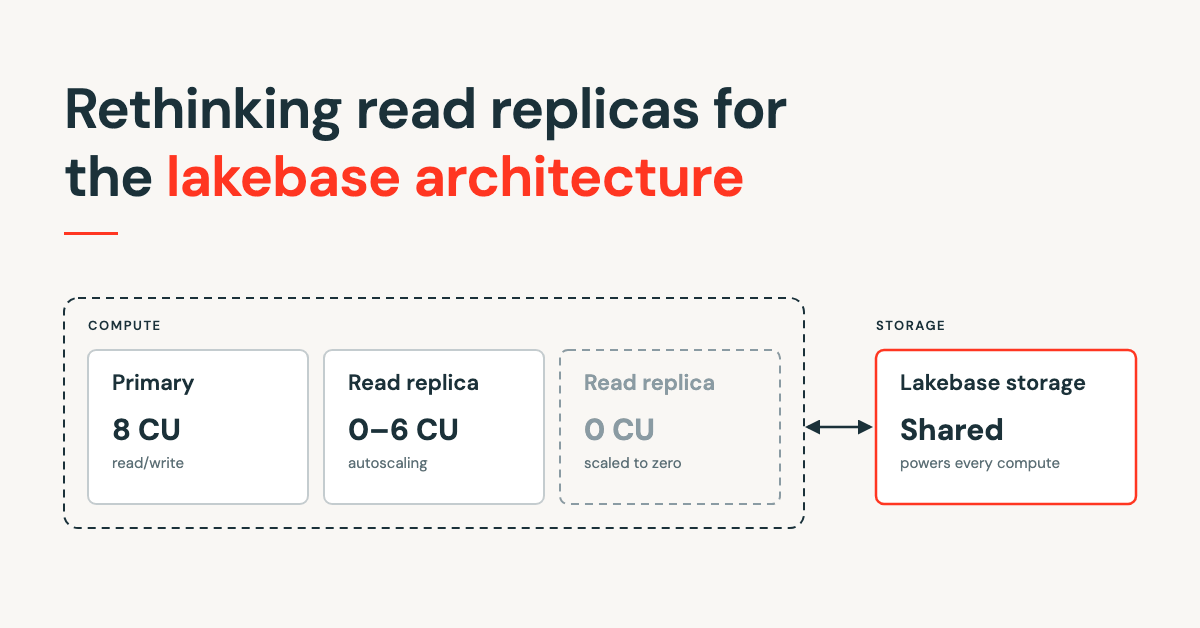
Rethinking read replicas for the lakebase architecture
Databricks Blog
The idea behind read replicas makes sense: when your app gets busy, you add a couple...

Official announcement
Introducing the llama.cpp benchmark dashboard for AMD Ryzen and Radeon
Hugging Face Blog